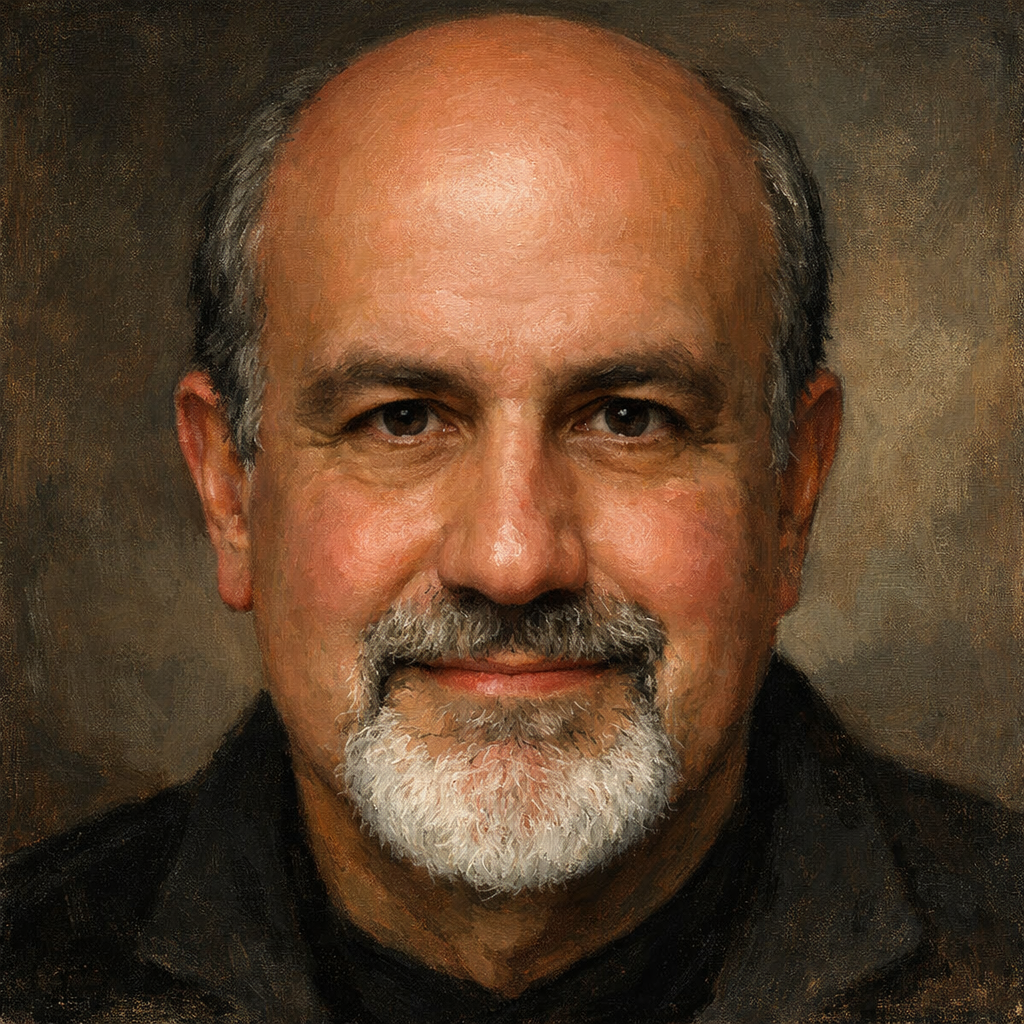
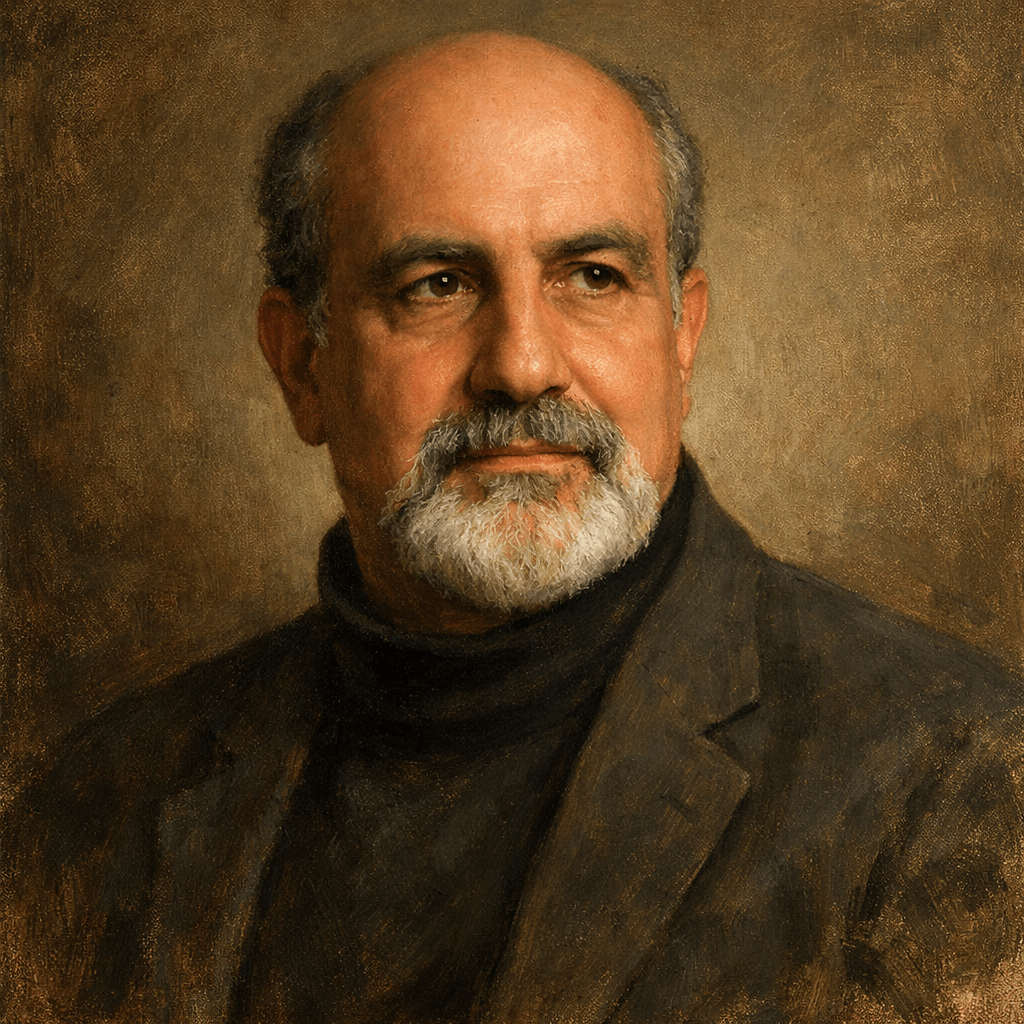
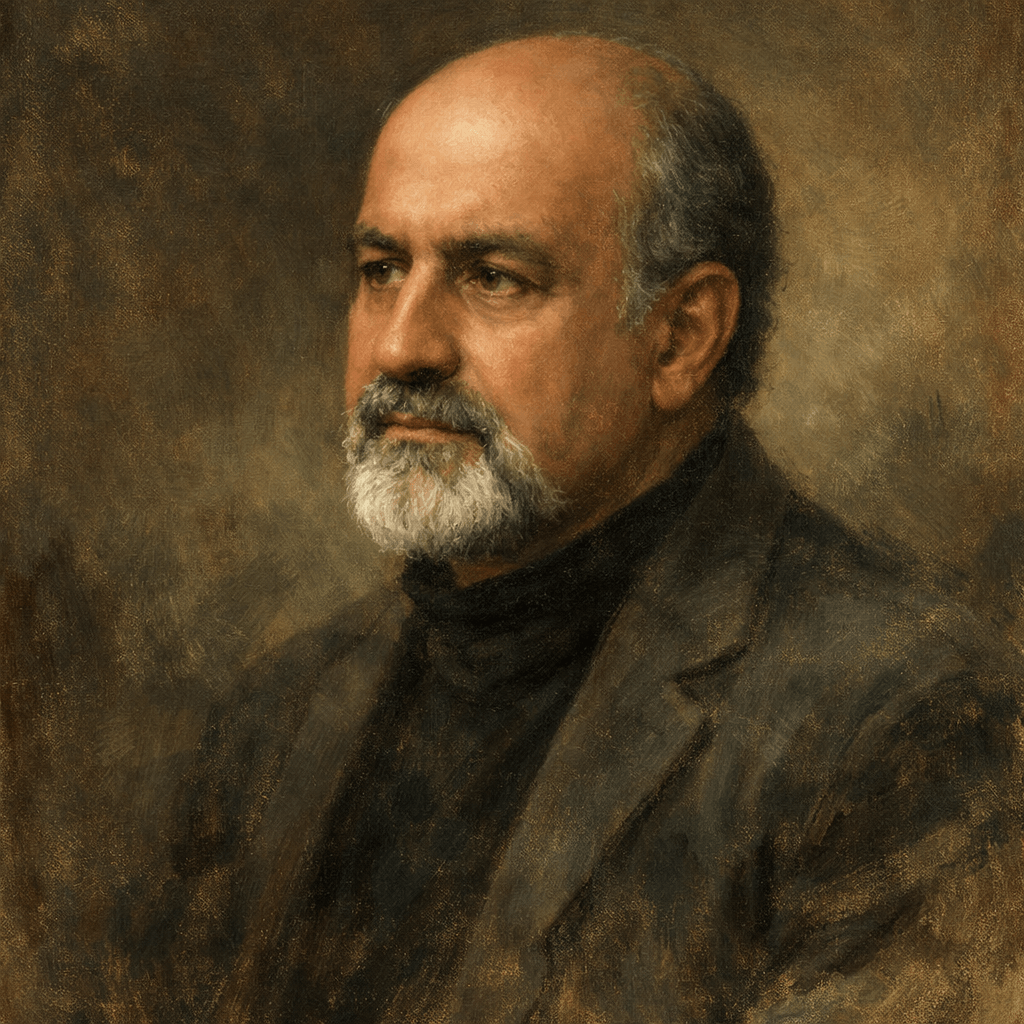
About Nassim Nicholas Taleb
Nassim Nicholas Taleb (born December 2, 1960, in Beirut, Lebanon) is a Lebanese-American scholar, statistician, former trader, and bestselling author known for his work on risk, uncertainty, and the impact of rare, high-impact events. A holder of a Ph.D. in managerial science from the University of Paris-Dauphine, Taleb spent two decades as a risk taker in various financial markets before dedicating himself to writing and research.
Taleb’s most influential works include Fooled by Randomness (2001), which critiques societal misunderstanding of chance and luck, and The Black Swan (2007), which introduced the concept of “black swan events”—unpredictable occurrences with massive consequences, such as the 2008 financial crisis. His later work, Antifragile (2012), expanded on resilience, arguing that some systems and ideas can actually benefit from volatility and disorder. These contributions have reshaped thinking in finance, economics, philosophy, and public policy.
Taleb’s ideas challenge the overreliance on predictive models and linear thinking, advocating instead for robustness against uncertainty. His critique of fragile systems and promotion of antifragility remain profoundly relevant in an era marked by pandemics, climate crises, and geopolitical turbulence. By emphasizing humility in the face of the unknown, Taleb’s work continues to inspire individuals and institutions to build resilience and embrace the inherent unpredictability of the world.
Nassim Nicholas Taleb—renowned philosopher, bestselling author, and polymath—is a voice of clarity in an age of complexity. Through seminal works like The Black Swan, Antifragile, and Fooled by Randomness, he has reshaped how we think about uncertainty, resilience, and the hidden forces shaping our world. A provocateur and deep thinker, Taleb challenges conventional wisdom, urging us to embrace randomness, question systems, and cultivate mental and societal antifragility. His ideas transcend finance and philosophy, offering a lens to navigate life’s chaos with courage and curiosity.
This collection of 150 quotes distills Taleb’s sharpest insights into bite-sized wisdom on themes that define our personal and collective journeys: from the quiet power of perseverance to the risks inherent in innovation; from the fragility of knowledge to the robustness of love. Whether you’re seeking clarity on life’s uncertainties, guidance on leadership, or inspiration to embrace uncertainty, these quotes cut through noise to reveal timeless truths. Dive in, and let Taleb’s contrarian brilliance ignite your thinking, challenge your assumptions, and equip you to thrive in a world of endless unpredictability.
Table of Contents
- Wisdom
- Success
- Courage
- Perseverance
- Love and Relationships
- Life Lessons
- Leadership and Influence
- Innovation and Risk
- Knowledge and Learning
- Society and Culture
- Randomness and Uncertainty
- Conclusion
Wisdom
Nassim Nicholas Taleb’s philosophy of wisdom is rooted in the acceptance of uncertainty and the pursuit of antifragility. His insights challenge conventional notions of knowledge, success, and control, urging us to embrace the unknown with curiosity and humility.
"Read books are far less valuable than unread ones. The library should contain as much of what you do not know as your financial means, mortgage rates, and the currently tight real-estate market allow you to put there." - Nassim Nicholas Taleb
"What I learned on my own I still remember" - Nassim Nicholas Taleb
"The imagination of the genius vastly surpasses his intellect; the intellect of the academic vastly surpasses his imagination" - Nassim Nicholas Taleb
Taleb’s reflections on knowledge and learning reveal a paradox: wisdom lies not in hoarding information but in recognizing the vastness of what we don’t know.
"They will envy you for your success, your wealth, for your intelligence, for your looks, for your status - but rarely for your wisdom." - Nassim Nicholas Taleb
"Things always become obvious after the fact" - Nassim Nicholas Taleb
"Intelligence consists in ignoring things that are irrelevant." - Nassim Nicholas Taleb
These quotes underscore Taleb’s view that wisdom is a quiet, often uncelebrated trait, distinct from the fleeting allure of conventional success.
"Let me be more aggressive: we are largely better at doing than we are at thinking, thanks to antifragility. I’d rather be dumb and antifragile than extremely smart and fragile, any time." - Nassim Nicholas Taleb
"You get pseudo-order when you seek order; you only get a measure of order and control when you embrace randomness." - Nassim Nicholas Taleb
"Remember that you are a Black Swan." - Nassim Nicholas Taleb
Here, Taleb redefines strength through antifragility, arguing that wisdom thrives in the face of chaos rather than in the pursuit of rigid control.
"We favor the visible, the embedded, the personal, the narrated, and the tangible; we scorn the abstract." - Nassim Nicholas Taleb
"By setting oneself totally free of constraints, free of thoughts, free of this debilitating activity called work, free of efforts, elements hidden in the texture of reality start staring at you; then mysteries that you never thought existed emerge in front of your eyes." - Nassim Nicholas Taleb
"The inability to predict outliers implies the inability to predict the course of history" - Nassim Nicholas Taleb
Taleb’s critique of human bias and his emphasis on the unseen highlight the futility of linear thinking in a world governed by unpredictable forces.
"You will be civilized on the day you can spend a long period doing nothing, learning nothing, and improving nothing, without feeling the slightest amount of guilt." - Nassim Nicholas Taleb
"Character is proportionate to N, the number of consecutive failures without being discouraged, or equivalently, the number of successive rejections without being intimidated." - Nassim Nicholas Taleb
"History is opaque. You see what comes out, not the script that produces events, ... The generator of historical events is different from the events themselves, much as the minds of the gods cannot be read just by witnessing their deeds." - Nassim Nicholas Taleb
These quotes reflect Taleb’s belief that wisdom requires patience, resilience, and an acceptance of history’s inscrutable nature.
"We tend to treat our knowledge as personal property to be protected and defended. It is an ornament that allows us to rise in the pecking order...we take what we know a little too seriously." - Nassim Nicholas Taleb
"What fools call 'wasting time' is most often the best investment." - Nassim Nicholas Taleb
Taleb dismantles the ego-driven pursuit of knowledge, advocating instead for a wisdom rooted in humility and openness to serendipity.
Success
Nassim Nicholas Taleb redefines success as a deeply personal journey rooted in integrity, courage, and defiance of societal metrics. For Taleb, it is not about wealth, fame, or external validation but about living with honor, embracing risk, and staying true to one’s values in a world obsessed with fragility and illusion.
"Success is leading an honorable life. Honor implies that there are some actions you would categorically never do, regardless of the material rewards. It also means that there are things you would do unconditionally, regardless of the consequences." - Nassim Nicholas Taleb
"The classical man's worst fear was inglorious death; the modern man's worst fear is just death" - Nassim Nicholas Taleb
"To succeed in life requires a total inability to do anything that makes you uncomfortable when you look at yourself in the mirror." - Nassim Nicholas Taleb
Taleb’s first three quotes underscore his belief that success hinges on moral clarity and the courage to reject compromise, even at the cost of comfort or survival.
"Success is about honour, feeling morally calibrated, absence of shame, not what some newspaper defines from an external metric." - Nassim Nicholas Taleb
"Success is becoming in middle adulthood what you dreamed to be in late childhood." - Nassim Nicholas Taleb
"If you take risks and face your fate with dignity, there is nothing you can do that makes you small; if you don't take risks, there is nothing you can do that makes you grand, nothing." - Nassim Nicholas Taleb
Here, Taleb contrasts societal definitions of success with his vision of fulfillment as a return to childhood aspirations and a fearless embrace of one’s destiny.
"Democracies can't handle austerity measures very well." - Nassim Nicholas Taleb
"The key to wealth is that it doesn't matter. Once you've had it, you don't think anything of it; you can wear cheap watches." - Nassim Nicholas Taleb
"Avoid losers. If you hear someone use the words 'impossible', 'never', 'too difficult' too often, drop him or her from your social network." - Nassim Nicholas Taleb
These quotes reveal Taleb’s skepticism of systems and mindsets that prioritize comfort over resilience. He champions detachment from materialism and the importance of surrounding oneself with people unafraid to challenge limits.
"Dress your best on your execution day. Be extremely courteous to your assistant when you lose money. Try not to blame others for your fate, even if they deserve blame. Never exhibit any self-pity. Do not complain." - Nassim Nicholas Taleb
"Karl Marx, a visionary, figured out that you can control a slave much better by convincing him he is an employee." - Nassim Nicholas Taleb
Taleb’s closing quotes emphasize stoic dignity in adversity and a sharp critique of modern systems that mask oppression under the guise of freedom. Together, they paint a picture of success as a lifelong act of defiance, humility, and unyielding self-respect.
Courage
In Nassim Nicholas Taleb’s philosophy, courage is the bedrock of individual autonomy and resilience. He defines it not as recklessness, but as the audacity to act without seeking validation, to face uncertainty with dignity, and to embrace the unknown with strategic foresight.
"The ultimate freedom lies in not having to explain why you did something." - Nassim Nicholas Taleb
"Courage is the only virtue you cannot fake." - Nassim Nicholas Taleb
"If you take risks and face your fate with dignity, there is nothing you can do that makes you small; if you don’t take risks, there is nothing you can do that makes you grand, nothing." - Nassim Nicholas Taleb
"If my detractors knew me better they would hate me even more." - Nassim Nicholas Taleb
"The twentieth century was the bankruptcy of the social utopia; the twenty-first will be that of the technological one." - Nassim Nicholas Taleb
"We cannot truly plan, because we do not understand the future—but this is not necessarily bad news. We could plan while bearing in mind such limitations. It just takes guts." - Nassim Nicholas Taleb
"Don’t aim to be perfect! Aim to be antifragile." - Nassim Nicholas Taleb
"Individuals should think about the worst-case scenarios and plan for them. The world will be crazier than you think it will be. Put money away, and then you can live with much more freedom." - Nassim Nicholas Taleb
"A Stoic is someone who transforms fear into prudence, pain into transformation, mistakes into initiation, and desire into undertaking." - Nassim Nicholas Taleb
Taleb’s insistence on courage as an unforgeable trait underscores his skepticism of systems that demand conformity over conviction. The first three quotes reveal his belief in autonomy and authenticity, while the fourth and fifth highlight his unflinching critique of societal illusions.
The sixth through eighth quotes tie courage to practical wisdom, showing how it is necessary for navigating an unpredictable world. The final quote ties Stoicism to Taleb’s core message: true strength lies in adapting to chaos, not resisting it.
Perseverance
In Nassim Nicholas Taleb’s philosophy, perseverance is not just about enduring hardship but embracing the very essence of life through calculated risk and resilience. He argues that true perseverance emerges when we accept uncertainty, face failure with humility, and learn to harness disorder as a tool for growth.
"Life is sacrifice and risk taking, and nothing that doesn't entail some moderate amount of the former, under the constraint of satisfying the latter, is close to what we can call life. If you do not undertake a risk of real harm, reparable or even potentially irreparable, from an adventure, it is not an adventure." - Nassim Nicholas Taleb
"You have a real life if and only if you do not compete with anyone in any of your pursuits." - Nassim Nicholas Taleb
"Character is proportionate to N, the number of consecutive failures without being discouraged, or equivalently, the number of successive rejections without being intimidated." - Nassim Nicholas Taleb
These quotes underscore Taleb’s belief that perseverance is rooted in personal agency, embracing failure as a catalyst for growth, and measuring character through repeated adversity.
"It might be useful to be able to predict war. But tension does not necessarily lead to war, but often to peace and to denouement." - Nassim Nicholas Taleb
"Learn to fail with pride - and do so fast and cleanly. Maximise trial and error - by mastering the error part." - Nassim Nicholas Taleb
"He who has never sinned is less reliable than he who has only sinned once. And someone who has made plenty of errors-though never the same error more than once-is more reliable than someone who has never made any." - Nassim Nicholas Taleb
Taleb challenges conventional notions of perfection, emphasizing that mistakes are not signs of weakness but opportunities to refine our actions and decisions.
"Individuals should think about the worst-case scenarios and plan for them. The world will be crazier than you think it will be. Put money away, and then you can live with much more freedom." - Nassim Nicholas Taleb
"Nature builds things that are antifragile. In the case of evolution, nature uses disorder to grow stronger. Occasional starvation or going to the gym also makes you stronger, because you subject your body to stressors and gain from them." - Nassim Nicholas Taleb
"To become a philosopher, start by walking very slowly." - Nassim Nicholas Taleb
The final set of quotes reinforces the importance of antifragility—thriving in chaos—and the necessity of patience in the pursuit of wisdom.
Love and Relationships
Nassim Nicholas Taleb’s reflections on love and relationships often cut through romantic idealism to reveal the raw, sometimes unflinching truths of human connection. For Taleb, love is not merely a feeling but a commitment requiring sacrifice, authenticity, and the courage to embrace vulnerability. His aphorisms on this theme challenge superficiality and highlight the interplay between personal integrity and meaningful interaction.
"Love without sacrifice is like theft" - Nassim Nicholas Taleb
"Academia is to knowledge what prostitution is to love; close enough on the surface but, to the nonsucker, not exactly the same thing" - Nassim Nicholas Taleb
"If you can't put your soul into something, give it up and leave that stuff to someone else." - Nassim Nicholas Taleb
Taleb’s metaphors here draw stark contrasts between authenticity and commodification, framing love as a pursuit that demands genuine investment rather than transactional exchanges.
"Muscles without strength, friendship without trust, opinion without risk, change without aesthetics, age without values, food without nourishment, power without fairness, facts without rigor, degrees without erudition, militarism without fortitude, progress without civilization, complication without depth, fluency without content; these are the sins to remember." - Nassim Nicholas Taleb
"Work hard, not in grunt work, but in chasing such opportunities and maximizing exposure to them. This makes living in big cities invaluable because you increase the odds of serendipitous encounters-you gain exposure to the envelope of serendipity." - Nassim Nicholas Taleb
"He who has never sinned is less reliable than he who has only sinned once." - Nassim Nicholas Taleb
This trio underscores Taleb’s belief in the value of imperfection and the importance of meaningful risk-taking in both personal and intellectual growth.
"We glorify those who left their names in history books at the expense of those contributors about whom our books are silent. We humans are not just a superficial race - we are a very unfair one." - Nassim Nicholas Taleb
"If something is going on, I hear about it. I like to talk to people, I socialise. Television is a waste of time. Human contact is what matters." - Nassim Nicholas Taleb
"For many people, commuting is the worst part of the day, and policies that can make commuting shorter and more convenient would be a straightforward way to reduce minor but widespread suffering." - Nassim Nicholas Taleb
In these final reflections, Taleb critiques societal biases and emphasizes the irreplaceable value of direct human interaction, while also acknowledging the mundane yet profound impact of daily routines on well-being.
Life Lessons
Nassim Nicholas Taleb’s reflections on life are a blend of incisive observation and philosophical depth, often challenging conventional wisdom. His insights into human behavior, randomness, and resilience offer a blueprint for navigating uncertainty and cultivating wisdom in a complex world.
"The best way to measure the loss of intellectual sophistication - this 'nerdification,' to put it bluntly - is in the growing disappearance of sarcasm, as mechanic minds take insults a bit too literally." - Nassim Nicholas Taleb
"When you beat up someone physically, you get exercise and stress relief; when you assault him verbally on the Internet, you just harm yourself." - Nassim Nicholas Taleb
"Every social association that is not face-to-face is injurious to your health." - Nassim Nicholas Taleb
Taleb’s early quotes underscore his critique of modernity’s erosion of nuance and human connection, urging a return to embodied, authentic interactions.
"Stoicism is about the domestication of emotions, not their elimination." - Nassim Nicholas Taleb
"This is the central illusion in life: that randomness is a risk, that it is a bad thing ..." - Nassim Nicholas Taleb
"A man without a heroic bent starts dying at the age of thirty." - Nassim Nicholas Taleb
These quotes reveal Taleb’s emphasis on embracing randomness as a source of growth and his belief in the necessity of resilience and purpose to sustain a meaningful life.
"Fragility is the quality of things that are vulnerable to volatility." - Nassim Nicholas Taleb
"Information is antifragile; it feeds more on attempts to harm it than it does on efforts to promote it." - Nassim Nicholas Taleb
"Simplicity is not so simple to attain." - Nassim Nicholas Taleb
"When I trade, I don't have an agency problem; I have my neck on the line. When a bank or banker trades, it's not his neck on the line." - Nassim Nicholas Taleb
Here, Taleb contrasts fragility with antifragility, illustrating his core thesis: systems and ideas thrive when they benefit from disorder and direct accountability.
"The person you are most afraid to contradict is yourself." - Nassim Nicholas Taleb
"Modernity has replaced ethics with legalese, and the law can be gamed with a good lawyer." - Nassim Nicholas Taleb
"I hated school because I liked to daydream and the system tried to stop me from that." - Nassim Nicholas Taleb
"If I could predict what my day would exactly look like, I would feel a little bit dead." - Nassim Nicholas Taleb
These quotes highlight Taleb’s skepticism of rigid systems, his advocacy for intellectual freedom, and his rejection of predictability as a path to stagnation.
"Much of modern life is preventable chronic stress injury." - Nassim Nicholas Taleb
"While in theory randomness is an intrinsic property, in practice, randomness is incomplete information." - Nassim Nicholas Taleb
"There are secrets to our world that only practice can reveal, and no opinion or analysis will ever capture in full." - Nassim Nicholas Taleb
Taleb’s final trio of quotes distills his philosophy: wisdom arises not from theory alone but from lived experience, adaptability, and the courage to confront life’s inherent unpredictability.
Leadership and Influence
Nassim Nicholas Taleb’s philosophy often dismantles conventional wisdom about power, trust, and decision-making. His quotes on leadership and influence expose the fragility of systems, the dangers of misplaced loyalty, and the ethical pitfalls of authority. Through sharp wit and incisive analysis, Taleb challenges leaders—and those who follow them—to question assumptions and confront hidden risks.
"The best slave is someone who is overpaid and he knows it" - Nassim Nicholas Taleb
"Half of the people lie with their lips; the other half with their tears" - Nassim Nicholas Taleb
"There is a saying that bad traders divorce their spouse sooner than abandon their positions. Loyalty to ideas is not a good thing for traders, scientists - or anyone." - Nassim Nicholas Taleb
Taleb’s early quotes reveal his skepticism toward power dynamics and blind allegiance, warning against the dangers of overpayment and misplaced emotional loyalty.
"The three most harmful addictions are heroin, carbohydrates, and a monthly salary." - Nassim Nicholas Taleb
"Only he who is free with his time is free with his opinion." - Nassim Nicholas Taleb
Taleb critiques systems that create dependency, arguing that institutionalized rewards and structured schedules erode autonomy and critical thinking.
"At no point in history have so many non-risk-takers, that is, those with no personal exposure, exerted so much control." - Nassim Nicholas Taleb
"Banking is a very treacherous business because you don't realize it is risky until it is too late. It is like calm waters that deliver huge storms." - Nassim Nicholas Taleb
These quotes underscore Taleb’s recurring theme: true leadership requires personal accountability, while unchecked power in risk-averse institutions breeds systemic fragility.
"Wittgenstein's ruler: Unless you have confidence in the ruler's reliability, if you use a ruler to measure a table you may also be using the table to measure the ruler." - Nassim Nicholas Taleb
"Being an economist is the least ethical profession, closer to charlatanism than any science." - Nassim Nicholas Taleb
"Never trust a journalist unless she's your mother." - Nassim Nicholas Taleb
Taleb’s final trio of quotes dismantles the credibility of systems and professions that claim authority without transparency, urging a relentless questioning of both tools and those who wield them.
Innovation and Risk
Nassim Nicholas Taleb’s philosophy of innovation and risk is rooted in the understanding that uncertainty is not a threat but a catalyst for progress. He challenges conventional wisdom, advocating for systems and individuals that thrive in disorder and embrace the unpredictable as a source of strength.
"If you want to annoy a poet, explain his poetry." - Nassim Nicholas Taleb
"(J)ust as we tend to underestimate the role of luck in life in general, we tend to overestimate it in games of chance." - Nassim Nicholas Taleb
"Randomness works well in search sometimes better than humans." - Nassim Nicholas Taleb
Taleb’s early quotes highlight his skepticism toward rigid explanations and his recognition of randomness as a powerful, often undervalued force in human endeavors.
"We should reward people, not ridicule them, for thinking the impossible." - Nassim Nicholas Taleb
"Don't disturb complicated systems that have been around for a very long time. We don't understand their logic. Don't pollute the planet. Leave it the way we found it, regardless of scientific 'evidence'." - Nassim Nicholas Taleb
"Never think that lack of variability is stability. Don't confuse lack of volatility with stability, ever." - Nassim Nicholas Taleb
Here, Taleb underscores the need to nurture unconventional ideas while cautioning against tampering with ancient systems and misinterpreting stability as the absence of change.
"If you are an Arabic-speaking, Greek-Orthodox going to a French school it makes you deeply sceptical if you have to listen to three different accounts of the Crusades - one from the Muslim side, one from the Greek side and one from the Catholic side." - Nassim Nicholas Taleb
"The opposite of fragile is something that gains from disorder." - Nassim Nicholas Taleb
"You need a story to displace a story." - Nassim Nicholas Taleb
Taleb’s reflections on complexity and antifragility reveal his belief in narratives that challenge existing frameworks and systems that benefit from chaos.
"Bitcoin is the beginning of something great: a currency without a government, something necessary and imperative." - Nassim Nicholas Taleb
"A country's assets reside in the tinkerers, the hobbyists, and the risk-takers." - Nassim Nicholas Taleb
In these final quotes, Taleb champions decentralized innovation and the critical role of grassroots experimentation in shaping resilient societies.
Knowledge and Learning
In Nassim Nicholas Taleb's philosophy, knowledge and learning are deeply intertwined with uncertainty, resilience, and the recognition of limitations. He challenges traditional views of wisdom, advocating for systems that grow from disorder and emphasize the power of experience over rigid frameworks.
"A mistake is not something to be determined after the fact, but in the light of the information until that point" - Nassim Nicholas Taleb
"For the classics philosophical insight was the product of a life of leisure; for me a life of leisure is the product of philosophical insight" - Nassim Nicholas Taleb
"I no longer care about the financial system. I gave them my roadmap. OK? Thanks, bye. I've no idea what's going on. I'm disconnected. I'm totally disengaged" - Nassim Nicholas Taleb
"When you ask people, 'What's the opposite of fragile?,' they tend to say robust, resilient, adaptable, solid, strong. That's not it. The opposite of fragile is something that gains from disorder" - Nassim Nicholas Taleb
Taleb’s early quotes dismantle conventional notions of knowledge and failure, reframing mistakes as context-dependent and resilience as a dynamic trait shaped by disorder.
"Failure saves lives. In the airline industry, every time a plane crashes the probability of the next crash is lowered by that" - Nassim Nicholas Taleb
"An erudite is someone who displays less than he knows; a journalist or consultant the opposite" - Nassim Nicholas Taleb
"When we want to do something while unconsciously certain to fail, we seek advice so we can blame someone else for the failure" - Nassim Nicholas Taleb
"The fragile wants tranquility, the antifragile grows from disorder, and the robust doesn't care too much" - Nassim Taleb
Here, Taleb contrasts the value of humility with the performative nature of expertise, while redefining fragility and antifragility as responses to volatility—a core theme in his critique of modern systems.
"Comfort makes you weaker. We need some variability, some stressors. Not too much, but just enough" - Nassim Nicholas Taleb
"If you're going to fail, you'd rather fail early than fail late in general" - Nassim Nicholas Taleb
"Experience is devoid of the cherry-picking that we find in studies" - Nassim Nicholas Taleb
"People are much less interested in what you are trying to show them than what you are trying to hide" - Nassim Nicholas Taleb
These quotes highlight Taleb’s emphasis on stressors as catalysts for growth, the strategic value of early failures, and the inherent bias in curated knowledge versus lived experience.
"If you let markets - in general, my belief is that if you let markets give you information, they'll give you the information rather than artificially prop up everything" - Nassim Nicholas Taleb
"The narrative fallacy addresses our limited ability to look at sequences of facts without weaving an explanation into them, or, equivalently, forcing a logical link, an arrow of relationship, upon them. Explanations bind facts together. They make them all the more easily remembered; they help them make more sense. Where this propensity can go wrong is when it increases our impression of understanding" - Nassim Nicholas Taleb
"If you have more than one reason to do something (choose a doctor or veterinarian, hire a gardener or an employee, marry a person, go on a trip), just don’t do it. It does not mean that one reason is better than two, just that by invoking more than one reason you are trying to convince yourself to do something. Obvious decisions (robust to error) require no more than a single reason" - Nassim Nicholas Taleb
"Education makes the wise slightly wiser, but it makes the fool vastly more dangerous" - Nassim Nicholas Taleb
Taleb critiques systems that suppress natural feedback loops, warns against the illusion of coherence in storytelling, and exposes the hidden risks of overcomplicated decision-making.
"There are two types of people: those who try to win and those who try to win arguments. They are never the same" - Nassim Nicholas Taleb
"The more data we have, the more likely we are to drown in it" - Nassim Nicholas Taleb
"Information is bad for knowledge" - Nassim Nicholas Taleb
"Writing is the art of repeating oneself without anyone noticing" - Nassim Nicholas Taleb
Taleb’s final quotes underscore his skepticism toward data overload, the paradox of information, and the cyclical nature of ideas—reminding us that clarity often lies in simplicity, not complexity.
Society and Culture
Nassim Nicholas Taleb’s reflections on society and culture reveal a keen awareness of human nature, institutional failures, and the paradoxes of freedom and dependence. His insights challenge conventional wisdom, exposing how social structures, communication, and power dynamics often operate in counterintuitive ways, shaped by denial, herd behavior, and the tension between individual agency and collective norms.
"You will get the most attention from those who hate you. No friend, no admirer and no partner will flatter you with as much curiosity." - Nassim Nicholas Taleb
"It has been more profitable for us to bind together in the wrong direction than to be alone in the right one." - Nassim Nicholas Taleb
"People have the problem of denial. This is one of the things I learned in Lebanon. Everybody who left Beirut when the war started, including my parents, said, 'Oh, its temporary.' It lasted 17 years! People tend to underestimate the gravity of these situations. That's how they work." - Nassim Nicholas Taleb
"An option hides where we don't want it to hide." - Nassim Nicholas Taleb
Taleb’s early quotes underscore humanity’s paradoxical relationship with attention, denial, and the unseen risks embedded in collective behavior.
"You don't become completely free by just avoiding being a slave; you also need to avoid becoming a master." - Nassim Nicholas Taleb
"Never ask anyone for their opinion, forecast, or recommendation. Just ask them what they have—or don’t have—in their portfolio." - Nassim Nicholas Taleb
"In social policy, when we provide a safety net, it should be designed to help people take more entrepreneurial risks, not to turn them into dependents. This doesn't mean that we should be callous to the underprivileged." - Nassim Nicholas Taleb
"You are rich if and only if money you refuse tastes better than money you accept." - Nassim Nicholas Taleb
These quotes highlight Taleb’s skepticism of institutionalized freedom and the subtle trade-offs between autonomy, wealth, and dependency in social systems.
"The psychologist Gerd Gigerenzer has a simple heuristic. Never ask the doctor what you should do. Ask him what he would do if he were in your place. You would be surprised at the difference." - Nassim Nicholas Taleb
"Answer e-mails from junior people before more senior ones. Junior people have further to go and tend to remember who slighted them." - Nassim Nicholas Taleb
"Ideas come and go, stories stay." - Nassim Nicholas Taleb
"Weak men act to satisfy their needs, stronger men their duties." - Nassim Nicholas Taleb
Taleb’s observations on communication and hierarchy reveal how human interactions are often driven by unspoken hierarchies, emotional memory, and the enduring power of narrative over abstract ideas.
"You never win an argument until they attack your person." - Nassim Nicholas Taleb
"An ad hominem attack against an individual, not against an idea, is highly flattering. It indicates that the person does not have anything intelligent to say about your message." - Nassim Nicholas Taleb
"If you are in banking and lending, surprise outcomes are likely to be negative for you." - Nassim Nicholas Taleb
"Your reputation is harmed the most by what you say to defend it." - Nassim Nicholas Taleb
These quotes expose the fragility of reputation, the inevitability of conflict in debate, and the systemic risks inherent in institutions like banking.
"Life is a tightrope between two errors: generalizing the wrong particular and particularizing the wrong general." - Nassim Nicholas Taleb
"Being an entrepreneur is an existential, not just a financial thing." - Nassim Nicholas Taleb
"There is a certain category of fool—the overeducated, the academic, the journalist, the newspaper reader, the mechanistic scientist, the pseudo-empiricist, those endowed with what I call epistemic arrogance, this wonderful ability to discount what they did not see, the unobserved." - Nassim Nicholas Taleb
"Karl Marx, a visionary, figured out that you can control a slave much better by convincing him he is an employee." - Nassim Nicholas Taleb
Taleb’s final insights critique intellectual arrogance, the existential weight of entrepreneurship, and the manipulative power of institutional narratives—themes central to his critique of modern society.
Randomness and Uncertainty
Nassim Nicholas Taleb’s philosophy of randomness and uncertainty challenges the human tendency to impose order on a chaotic world. He argues that unpredictability is not a flaw but a fundamental feature of reality, and our overreliance on flawed models often blinds us to the true nature of risk and probability.
"The opposite of manliness isn’t cowardice; it’s technology." - Nassim Nicholas Taleb
"The world we live in is vastly different from the world we think we live in." - Nassim Nicholas Taleb
"You will get the most attention from those who hate you. No friend, no admirer and no partner will flatter you with as much curiosity." - Nassim Nicholas Taleb
"Injecting some confusion stabilizes the system." - Nassim Nicholas Taleb
These quotes underscore Taleb’s critique of overconfidence and the dangers of assuming control in a chaotic world.
"Randomness works well in search sometimes better than humans." - Nassim Nicholas Taleb
"Never ask anyone for their opinion, forecast, or recommendation. Just ask them what they have—or don’t have—in their portfolio." - Nassim Nicholas Taleb
"Financial institutions have been merging into a smaller number of very large banks. Almost all banks are interrelated. So the financial ecology is swelling into gigantic, incestuous, bureaucratic banks-when one fails, they all fall ... We have moved from a diversified ecology of small banks, with varied lending policies, to a more homogeneous framework of firms that all resemble one another. True, we now have fewer failures, but when they occur ... I shiver at the thought." - Nassim Nicholas Taleb
"Economics make homeopath and alternative healers look empirical and scientific." - Nassim Nicholas Taleb
Here, Taleb dismantles the myths of expertise and systemic stability, revealing how even in economics, randomness reigns supreme.
"History doesn't crawl; it leaps." - Nassim Nicholas Taleb
"If you roll dice, you know that the odds are one in six that the dice will come up on a particular side. So you can calculate the risk. But, in the stock market, such computations are bull - you don't even know how many sides the dice have!" - Nassim Nicholas Taleb
"Prediction, not narration, is the real test of our understanding of the world." - Nassim Nicholas Taleb
"Forecasting by bureaucrats tends to be used for anxiety relief rather than for adequate policy making." - Nassim Nicholas Taleb
These quotes highlight Taleb’s skepticism of linear progress and the futility of relying on flawed predictions to navigate an uncertain future.
"When an investor focuses on short-term investments, he or she is observing the variability of the portfolio, not the returns - in short, being fooled by randomness." - Nassim Nicholas Taleb
Taleb’s warning about the dangers of mistaking noise for signal in financial decisions encapsulates his broader message on embracing uncertainty.
Additional Quotes
"Read books are far less valuable than unread ones. The library should contain as much of what you do not know as your financial means, mortgage rates, and the currently tight real-estate market alow you to put there." - Nassim Nicholas Taleb
"Love without sacrifice is like theft" - Nassim Nicholas Taleb
"If you want to annoy a poet, explain his poetry." - Nassim Nicholas Taleb
"Wit seduces by signaling intelligence without nerdiness." - Nassim Nicholas Taleb
"The problem of knowledge is that there are many more books on birds written by ornithologists than books on birds written by birds and books on ornithologists written by birds" - Nassim Nicholas Taleb
"The curious mind embraces science; the gifted and sensitive, the arts; the practical, business; the leftover becomes an economist" - Nassim Nicholas Taleb
"When people get rich, they shed their skin-in-the-game-driven experiential mechanism. They lose control of their preferences, substituting constructed preferences for their own, complicating their lives unnecessarily, triggering their own misery." - Nassim Nicholas Taleb
"The ultimate freedom lies in not having to explain why you did something." - Nassim Nicholas Taleb
"What I learned on my own I still remember" - Nassim Nicholas Taleb
"Why do we keep focusing on the minutiae, not the possible significant large events, in spite of the obvious evidence of their huge influence?" - Nassim Nicholas Taleb
"The imagination of the genius vastly surpasses his intellect; the intellect of the academic vastly surpasses his imagination" - Nassim Nicholas Taleb
"It took us a while to discover that we do effectively think, but that we more readily narrate backward in order to give ourselves the illusion of understanding, and give a cover to our past actions." - Nassim Nicholas Taleb
"Meditation is a way to be narcissistic without hurting anyone" - Nassim Nicholas Taleb
"It has been more profitable for us to bind together in the wrong direction than to be alone in the right one. Those who have followed the assertive idiot rather than the introspective wise person have passed us some of their genes. This is apparent from a social pathology: psychopaths rally followers." - Nassim Nicholas Taleb
"If you hear a "prominent" economist using the word 'equilibrium,' or 'normal distribution,' do not argue with him; just ignore him, or try to put a rat down his shirt." - Nassim Nicholas Taleb
"Suckers think that you cure greed with money, addiction with substances, expert problems with experts, banking with bankers, economics with economists, and debt crises with debt spending" - Nassim Nicholas Taleb
"What organized dating sites fail to understand is that the people are far more interesting in what they don't say about themselves." - Nassim Nicholas Taleb
"Missing a train is only painful if you run after it! Likewise, not matching the idea of success others expect from you is only painful if that’s what you are seeking." - Nassim Nicholas Taleb
"My biggest problem with modernity may lie in the growing separation of the ethical and the legal" - Nassim Nicholas Taleb
"The ethical is always more robust than the legal. Over time it is the legal that should converge to the ethical, never the reverse. Hence, laws come and go; ethics stay." - Nassim Nicholas Taleb
"... to figure out why ethics, moral obligations, and skills cannot be easily separable in real life, consider the following when you tell someone in a position of responsibility, say your bookkeeper, "I trust you." Do you mean that one you trust his ethics?" - Nassim Nicholas Taleb
"... it is hard to disentangle ethics on one hand, from knowledge and competence on the other ..." - Nassim Nicholas Taleb
"Don't tell me what you think: just tell me what's in your portfolio." - Nassim Nicholas Taleb
"... it is about the distortions of symmetry and reciprocity in life: if you have the rewards, you must also get some of the risks— not let others pay the price of your mistakes. If you inflict risk onto others and they are harmed, you need to pay some price for it." - Nassim Nicholas Taleb
"The best slave is someone who is overpaid and he knows it" - Nassim Nicholas Taleb
"The best slave is someone you overpay and who knows it, terrified of losing his status." - Nassim Nicholas Taleb
"Under opacity and in the newfound complexity of the world, people can hide risks and hurt others, with the law incapable of catching them. Iatrogenics has both delayed and invisible consequences. It is hard to see causal links, to fully understand what’s going on. Under such epistemic limitations, skin in the game is the only true mitigator of fragility." - Nassim Nicholas Taleb
"Success is leading an honorable life. Honor implies that there are some actions you would categorically never do, regardless of the material rewards. It also means that there are things you would do unconditionally, regardless of the consequences." - Nassim Nicholas Taleb
"It takes a huge investment in introspection to learn that the thirty or more hours spent “studying” the news last month neither had any predictive ability during your activities of that month nor did it impact your current knowledge of the world." - Nassim Nicholas Taleb
"Half of the people lie with their lips; the other half with their tears" - Nassim Nicholas Taleb
"Life is sacrifice and risk taking, and nothing that doesn't entail some moderate amount of the former, under the constraint of satisfying the latter, is close to what we can call life. If you do not undertake a risk of real harm, reparable or even potentially irreparable, from an adventure, it is not an adventure." - Nassim Nicholas Taleb
"The best way to measure the loss of intellectual sophistication - this "nerdification," to put it bluntly - is in the growing disappearance of sarcasm, as mechanic minds take insults a bit too literally." - Nassim Nicholas Taleb
"When you beat up someone physically, you get excercise and stress relief; when you assault him verbally on the Internet, you just harm yourself." - Nassim Nicholas Taleb
"Every social association that is not face-to-face is injurious to your health" - Nassim Nicholas Taleb
"One learns new words without making a nerd-effort, but rather another type of effort: to communicate, mostly by being forced to read the mind of the other person - suspending ones fear of making mistakes." - Nassim Nicholas Taleb
"(J)ust as we tend to underestimate the role of luck in life in general, we tend to overestimate it in games of chance." - Nassim Nicholas Taleb
"A mistake is not something to be determined after the fact, but in the light of the information until that point" - Nassim Nicholas Taleb
"They will envy you for your success, your wealth, for your intelligence, for your looks, for your status - but rarely for your wisdom." - Nassim Nicholas Taleb
"They think that intelligence is about noticing things are relevant (detecting patterns); in a complex world, intelligence consists in ignoring things that are irrelevant (avoiding false patterns)" - Nassim Nicholas Taleb
"There is a saying that bad traders divorce their spouse sooner than abandon their positions. Loyalty to ideas is not a good thing for traders, scientists - or anyone." - Nassim Nicholas Taleb
"A prophet is not someone with special visions, just someone blind to most of what others see" - Nassim Nicholas Taleb
"Academia is to knowledge what prostitution is to love; close enough on the surface but, to the nonsucker, not exactly the same thing" - Nassim Nicholas Taleb
"Just as no monkey is as good-looking as the ugliest of humans, no academic is worthier than the worst of the creators" - Nassim Nicholas Taleb
"If you can't put your soul into something, give it up and leave that stuff to someone else." - Nassim Nicholas Taleb
"The fool generalizes the particular; the nerd particularizes the general; some do both; and the wise does neither" - Nassim Nicholas Taleb
"In this world, you should always be suspicious of the knowledge you derive from data." - Nassim Nicholas Taleb
"It is true that a thousand days cannot prove you right, but one day can prove you to be wrong." - Nassim Nicholas Taleb
"The three most harmful addictions are heroin, carbohydrates, and a monthly salary." - Nassim Nicholas Taleb
"Only he who is free with his time is free with his opinion." - Nassim Nicholas Taleb
"Things always become obvious after the fact" - Nassim Nicholas Taleb
"This visible tension between individual and collective interests is new in history…" - Nassim Nicholas Taleb
"The “persecution” of the Christians had vastly more to do with the intolerance of the Christians for the pantheon of local gods than the reverse. What we read is history written by the Christian side, not the Greco-Roman one." - Nassim Nicholas Taleb
"And, just as it is harder to have good qualities when one is rich than when one is poor, it is harder to be a Stoic when one is wealthy, powerful, and respected than when one is destitute, miserable, and lonely." - Nassim Nicholas Taleb
"I am, at the Fed level, libertarian;at the state level, Republican;at the local level, Democrat;and at the family and friends level, a socialist.If that saying doesn’t convince you of the fatuousness of left vs. right labels, nothing will." - Nassim Nicholas Taleb
"Learning is rooted in repetition and convexity, meaning that the reading of a single text twice is more profitable than reading two different things once." - Nassim Nicholas Taleb
"If the past, by bringing surprises, did not resemble the past previous to it (what I call the past's past), then why should our future resemble our current past?" - Nassim Nicholas Taleb
"The notion of future mixed with chance, not a deterministic extension of your perception of the past, is a mental operation that our mind cannot perform." - Nassim Nicholas Taleb
"These were the days before I decided to climb up the mountain, speak slowly and in a priestly tone, and try shaming people rather than insulting them." - Nassim Nicholas Taleb
"Charm is the ability to insult people without offending them; nerdiness the reverse" - Nassim Nicholas Taleb
"If your private life conflicts with your intellectual opinion, it cancels your intellectual ideas, not your private life." - Nassim Nicholas Taleb
"The next time someone pesters you with unneeded advice, gently remind him of the fate of the monk whom Ivan the Terrible put to death for delivering uninvited (and moralizing) advice. It works as a short-term cure." - Nassim Nicholas Taleb
"True, our knowledge does grow, but it is threatened by greater increases in confidence, which make our increase in knowledge at the same time an increase in confusion, ignorance, and conceit." - Nassim Nicholas Taleb
"People focus on role models; it is more effective to find antimodels - people you don't want to resemble when you grow up" - Nassim Nicholas Taleb
"It does not matter how frequently something succeeds if failure is too costly to bear." - Nassim Nicholas Taleb
"The difference between technology and slavery is that slaves are fully aware that they are not free" - Nassim Nicholas Taleb
"Modernity: we created youth without heroism, age without wisdom, and life without grandeur" - Nassim Nicholas Taleb
"The four most influential moderns: Darwin, Marx, Freud, and (the productive) Einstein were scholars but not academics. It has always been hard to do genuine - and no perishable - work within institutions" - Nassim Nicholas Taleb
"To understand "progress": all places we call ugly are both man-made and modern, never natural or historical." - Nassim Nicholas Taleb
"Nobody accepts randomness in his own success, only in his failure." - Nassim Nicholas Taleb
"If my brain can ttell the difference between noise and signal, my heart cannot." - Nassim Nicholas Taleb
"The opposite of manliness isn’t cowardice; it’s technology." - Nassim Nicholas Taleb
"Doctors most commonly get mixed up between absence of evidence and evidence of abense" - Nassim Nicholas Taleb
"Courage is the only virtue you cannot fake." - Nassim Nicholas Taleb
"The classical man's worst fear was inglorious death; the modern man's worst fear is just death" - Nassim Nicholas Taleb
"...my classical values make me advocate the triplet of erudition, elegance, and courage; against modernity's phoniness, nerdiness, and philistinism...many philistines reduce my ideas to an opposition of technology when in fact I am opposing the naive blindness to it's side affects - the fragility criterion. I'd rather be unconditional about ethical and conditional about technology than the the reverse." - Nassim Nicholas Taleb
"I attended a symposium, an event named after a fifth century (B.C.) Athenian drinking party in which nonnerds talked about love; alas, there was no drinking, and mercifully, nobody talked about love." - Nassim Nicholas Taleb
"A central argument is never a summary. It is more like a generator." - Nassim Nicholas Taleb
"But the worst touristification is the life we moderns have to lead in captivity, during our leisure hours: Friday night opera, scheduled parties, scheduled laughs. Again, golden jail. This "goal-driven" attitude hurts deeply inside my existential self." - Nassim Nicholas Taleb
"Life is about execution rather than purpose." - Nassim Nicholas Taleb
"Those who do not think that employment is systemic slavery are either blind or employed." - Nassim Nicholas Taleb
"Almost anything around us of significance is hard to grasp linguistically." - Nassim Nicholas Taleb
"Being self-owned is a state of mind." - Nassim Nicholas Taleb
"You view the world from within a model." - Nassim Nicholas Taleb
"Freedom is always associated with risk taking, whether it leads to it or comes from it." - Nassim Nicholas Taleb
"If you do not take risks for your opinion, you're nothing." - Nassim Nicholas Taleb
"English does not distinguish between arrogant-up (irreverence toward the temporarily powerful) and arrogant-down (directed at the small guy)." - Nassim Nicholas Taleb
"Hormesis is a metaphor: antifragility is a phenomenon." - Nassim Nicholas Taleb
"A theory is like medicine (or government): often useless, sometimes necessary, always self-serving, and on occasion lethal. So it needs to be used with care, moderation and close adult supervision." - Nassim Nicholas Taleb
"The problem is that our ideas are sticky: once we produce a theory, we are not likely to change our minds...." - Nassim Nicholas Taleb
"I will repeat the following until I am hoarse: it is contagion that determines the fate of a theory in social science, not its validity." - Nassim Nicholas Taleb
"The author cites researcher David Howard's idea of post-traumatic growth. Howard contends that some individuals faced with a traumatic event actually develop new strength." - Nassim Nicholas Taleb
"The rationalist imagines an imbecile-free society; the empiricist and imbecile-proof one, or even better, a rationalist-proof one." - Nassim Nicholas Taleb
"Know how to rank your beliefs not according to their plausibility but by the harm they may cause." - Nassim Nicholas Taleb
"Read books are far less valuable than unread ones. The library should contain as much of what you do not know as your financial means, mortgage rates, and the currently tight real-estate market allow you to put there. You will accumulate more knowledge and more books as you grow older, and the growing number of unread books on the shelves will look at you menacingly. Indeed, the more you know, the larger the rows of unread books. Let us call this collection of unread books an antilibrary." - Nassim Nicholas Taleb
"true humility is when you can surprise yourself more than others; the rest is either shyness or good marketing" - Nassim Nicholas Taleb
"Further, in writing, I feel corrupt and unethical if I have to look up a subject in a library as part of the writing itself. This acts as a filter--it is the only filter. If the subject is not interesting enough for me to look it up independently, for my own curiosity or purposes, and I have not done so before, then I should not be writing about it at all, period. It does not mean that libraries (physical and virtual) are not acceptable; it means that they should not be the source of any idea." - Nassim Nicholas Taleb
"My best definition of a nerd: someone who asks you to explain an aphorism" - Nassim Nicholas Taleb
"In poor countries, officials receive explicit bribes; in D.C. they get the sophisticated, implicit, unspoken promise to work for large corporations" - Nassim Nicholas Taleb
". . . the world in which we live has an increasing number of feedback loops, causing events to be the cause of more events (say, people buy a book because other people bought it), thus generating snowballs and arbitrary and unpredictable planet-wide winner-take-all effects." - Nassim Nicholas Taleb
"Luck is the grand equalizer." - Nassim Nicholas Taleb
"I suspect the I.Q., SAT, and school grades are tests designed by nerds so they can get high scores in order to call each other intelligent...Smart and wise people who score low on IQ tests, or patently intellectually defective ones, like the former U.S. president George W. Bush, who score high on them (130), are testing the test and not the reverse." - Nassim Nicholas Taleb
"The occurrence of a highly improbable event is the equivalent of the nonoccurrence of a highly probable one" - Nassim Nicholas Taleb
"When you develop your opinions on the basis of weak evidence, you will have difficulty interpreting subsequent information that contradicts these opinions, even if this new information is obviously more accurate." - Nassim Nicholas Taleb
"In the past, only some of the males, but all of the females, were able to procreate. Equality is more natural for females." - Nassim Nicholas Taleb
"... what you see is likely to be less Black Swannish than what you do not see." - Nassim Nicholas Taleb
"Probability and expectation are not the same. Its probability and probability times the pay off." - Nassim Nicholas Taleb
"Most info-Web-media-newspaper types have a hard time swallowing the idea that knowledge is reached (mostly) by removing junk from peoples heads" - Nassim Nicholas Taleb
"To bankrupt a fool, give him information." - Nassim Nicholas Taleb
"But never engage in detailed overexplanations of why something is important: one debases a principle by endlessly justifying it." - Nassim Nicholas Taleb
"An observation that people who live permanently in an adoptive country tend to progressively generalize the bad and particularize the good, that is, attribute the bad traits in people they encounter to the national trait of the natives, and the good things to the individual.This holds equally well for French people living in the U.S. as it does for Americans living in France." - Nassim Nicholas Taleb
"Never ask a man if he is from Sparta: If he were, he would have let you know such an important fact - and if he were not, you could hurt his feelings." - Nassim Nicholas Taleb
"The quality of a decision cannot be solely judged based on its outcome." - Nassim Nicholas Taleb
"The difference between successful people and really successful people is that really successful people say no to almost everything" - Nassim Nicholas Taleb
"...this evolution is not a competition between ideas, but between humans and systems based on such ideas. An idea does not survive because it is better than the competitor, but rather because the person who holds it has survived!" - Nassim Nicholas Taleb
"A life saved is a statistic; a person hurt is an anecdote. Statistics are invisible; anecdotes are salient." - Nassim Nicholas Taleb
"...the mental probabilistic map in one's mind is so geared toward sensational that one would realize informational gains by dispensing with the news." - Nassim Nicholas Taleb
"There is asymmetry. Those who die do so very early in the game, while those who live go on living very long. Whenever there is asymmetry in outcomes, the average survival has nothing to do with the median survival." - Nassim Nicholas Taleb
"A prophet is not someone who first had an idea. He is the one to first believe in it and take it to its conclusion." - Nassim Nicholas Taleb
"The supply of information to which we are exposed thanks to modernity is transforming humans from the equable second fellow into the neurotic first one. … the second fellow reacts to real information, the first largely to noise. The difference between the two fellows will show us the difference between noise and signal. Noise is what you are supposed to ignore, signal what you need to heed." - Nassim Nicholas Taleb
"Just as we are not likely to mistake a bear for a stone (but likely to mistake a stone for a bear), it is almost impossible for someone rational, with a clear, uninfected mind, someone who is not drowning in data, to mistake a vital signal, one that matters for his survival, for noise." - Nassim Nicholas Taleb
"Everything in religious law comes down to the refinements, applications, and interpretations of the Golden Rule, “Don’t do unto others what you don’t want them to do to you.” This we saw was the logic behind Hammurabi’s rule." - Nassim Nicholas Taleb
"When you spend time of the bridge of a ship or in a coxswain’s station with a large compass in front, you can easily develop the impression that the compass is directing the ship rather than merely reflecting its direction." - Nassim Nicholas Taleb
"Bullish or bearish are terms used by people who do not engage in practicing uncertainty, like the television commentators, or those who have no experience in handling risk. Alas, investors and businesses are not paid in probabilities; they are paid in dollars. Accordingly, it is not how likely an event is to happen that matters, it is how much is made when it happens that should be the consideration." - Nassim Nicholas Taleb
"Academic work, because of its attention-seeking orientation, can be easily subjected to Lindy effects: think of the hundreds of thousands of papers that are just noise, in spite of how hyped they were at the time of publication." - Nassim Nicholas Taleb
"More data means more information, but it also means more false information." - Nassim Nicholas Taleb
"Every plane crash brings us closer to safety, improves the system, and makes the next flight safer…" - Nassim Nicholas Taleb
"Never hire an academic unless his function is to partake of the rituals of writing papers or taking exams." - Nassim Nicholas Taleb
"We have this culture of financialization. People think they need to make money with their savings rather with their own business. So you end up with dentists who are more traders than dentists. A dentist should drill teeth and use whatever he does in the stock market for entertainment." - Nassim Nicholas Taleb
"One of the problems I face in life is that whenever I tell people that the Gaussian bell curve is not ubiquitous in real life, only in the minds of statisticians, they require me to “prove it”—which is easy to do, as we will see in the next two chapters, yet nobody has managed to prove the opposite" - Nassim Nicholas Taleb
"Convincing - and confident - disciplines, say, physics, tend to use little statistical backup, while political science and economics, which have never produced anything of note, are full of elaborate statistics and statistical “evidence” (and you know that once you remove the smoke, the evidence is not evidence)." - Nassim Nicholas Taleb
"Black Swans and tail events run the socioeconomic world" - Nassim Nicholas Taleb
"...avoidance of small mistakes makes the large ones more severe." - Nassim Nicholas Taleb
"Those who were unlucky in life in spite of their skills would eventually rise. The lucky fool might have benefited from some luck in life; over the longer run he would slowly converge to the state of a less-lucky idiot. Each one would revert to his long-term properties." - Nassim Nicholas Taleb
"It is always convenient to invoke universalism when you are in the majority." - Nassim Nicholas Taleb
"As Yogi Berra said, “In theory there is no difference between theory and practice; in practice there is." - Nassim Nicholas Taleb
"Do not pay attention to what people say, only to what they do, and how much of their necks they are putting on the line." - Nassim Nicholas Taleb
"Only the autodidacts are free." - Nassim Nicholas Taleb
"People with an engineering-oriented mind will tend to look at everything around as an engineering problem. This is a very good thing in engineering, but when dealing with cats, it is a much better idea to hire veterinarians than circuit engineers…" - Nassim Nicholas Taleb
"... you can always mention Wittgenstein since he is vague enough to always seem relevant" - Nassim Nicholas Taleb
"We" are the empirical decision makers who hold that uncertainty is our discipline, and that understanding how to act under conditions of incomplete information is the highest and most urgent human pursuit." - Nassim Nicholas Taleb
"Things that have worked for a long time are preferable - they are more likely to have reached their ergodic states. At the worst, we don't know how long they'll last." - Nassim Nicholas Taleb
"Clearly, binary outcomes are not very prevalent in life; they mostly exist in laboratory experiments and in research papers. In life, payoffs are usually open-ended, or, at least, variable." - Nassim Nicholas Taleb
"On the left, in the fragile category, the mistakes are rare and large when they occur, hence irreversible; to the right the mistakes are small and benign, even reversible and quickly overcome. They are also rich in information. So a certain system of tinkering and trial and error would have the attributes of antifragility." - Nassim Nicholas Taleb
"Redundancy is ambiguous because it seems like a waste if nothing unusual happens. Except that something unusual happens—usually." - Nassim Nicholas Taleb
"...the most intriguing aspect of evolution is that it only works because of antifragility; it is in love with stressors, randomness, uncertainty, and disorder – while individual organisms are relatively fragile, the gene pool takes advantages of shocks to enhance its fitness." - Nassim Nicholas Taleb
"Proclus was known to repeat the metaphor that statues are carved by subtraction.. Michelangelo was asked how he carved the statue of David, his answer as: "It's simple. I just remove everything that is not David." - Nassim Nicholas Taleb
"I have never had personal debt and never will." - Nassim Nicholas Taleb
"Antifragility is beyond resilience or robustness. The resilient resists shocks and stays the same; the antifragile gets better." - Nassim Nicholas Taleb
"Stoicism is about the domestication of emotions, not their elimination." - Nassim Nicholas Taleb
Conclusion
Nassim Nicholas Taleb’s enduring legacy lies in his unflinching exploration of uncertainty, resilience, and the hidden forces shaping human existence. Through his incisive quotes and groundbreaking ideas—spanning antifragility, the power of randomness, and the pitfalls of over-optimization—he has redefined how we perceive risk, success, and the fragility of systems. His work transcends academia, offering a philosophical compass for navigating a world defined by chaos and complexity. By challenging conventional wisdom and celebrating the unknown, Taleb has become a modern sage for a generation grappling with volatility and ambiguity.
The themes distilled from his 150 best quotes—wisdom in adversity, courage to embrace uncertainty, love as a force of connection, and leadership rooted in humility—paint a portrait of life as both a relentless struggle and a profound journey of discovery. Taleb’s insights remind us that perseverance is not about avoiding failure but about thriving through it; that knowledge is a tool, not a shield; and that true innovation emerges from embracing, not rejecting, life’s inherent messiness. As we reflect on his words, let us carry forward his call to antifragility: to build lives and systems that gain strength from disorder, to find freedom in uncertainty, and to turn the unpredictable into our greatest ally. In a world that fears the unknown, Taleb’s legacy urges us to dance in the storm.
Explore Quote Collections
Books & Knowledge
Explore the best quotes about the power of reading, the magic of libraries, book collecting, literary wisdom, and the timeless bond between reader and author.
Friendship
Explore the best friendship quotes about true friends, loyalty, trust, betrayal, love, and lifelong bonds. Browse curated quote collections by theme.

Life
Explore the deepest questions of existence. A curated collection of quotes on the journey of life, the pursuit of wisdom, the beauty of struggle, and the acceptance of mortality.
Persistence & Progress
Discover the power of steady progress. Explore curated quotes on overcoming challenges, simplifying complex problems, staying focused, and the art of getting things done.
You Might Also Like



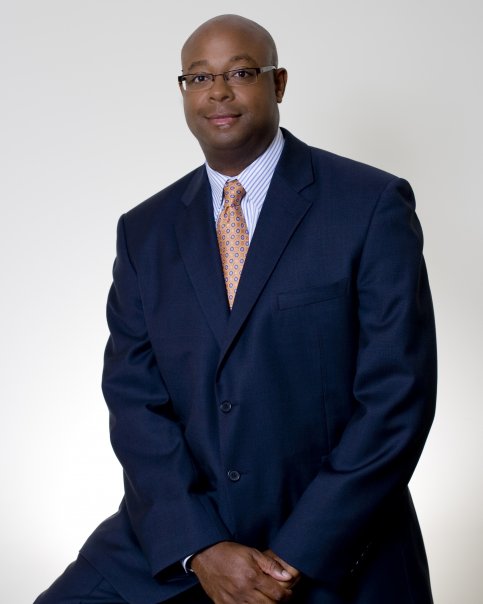
Patrick Wright
Software engineer and creator of Quotesperation. I curate wisdom from history's greatest minds to inspire and guide modern life. When I'm not collecting quotes, I'm writing about technology and finding connections between timeless wisdom and today's challenges.