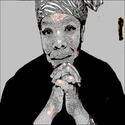
maya angelou
Maya Angelou was born on April 4, 1928, in St. Louis, a city that shaped the early coordinates of a life she would later examine with unflinching candor. A citizen of the United States, she wrote in English across a career that moved between poetry, memoir, essay, and civil rights activism, finding in each form a distinct way of engaging with the world around her.
Her work as a memoirist produced seven autobiographies, among them I Know Why the Caged Bird Sings, the title that drew sustained attention to her voice. Her poetry collection And Still I Rise extended that voice into verse, while the poem "On the Pulse of Morning" and the work Even the Stars Look Lonesome further demonstrated the range she maintained across different genres. Her education included time at George Washington High School and the California Labor School, and her activism situated her within the broader civil rights movement of her era.
Recognition came from both artistic and civic institutions. She received the Grammy Award for Best Audio Book, Narration and Storytelling Recording, the National Medal of Arts, the Presidential Medal of Freedom, the Spingarn Medal, and the Marian Anderson Award. These distinctions spanned literature, the performing arts, and public service, reflecting the several directions in which her career moved over the decades.
Maya Angelou died on May 28, 2014, in Winston-Salem. Her career, which encompassed seven autobiographies, multiple collections of poetry and prose, and sustained work as a civil rights activist, had traced a long arc from her beginnings in St. Louis to the formal honors of her final years.
Quotes by maya angelou
maya angelou's insights on:

I always knew from that moment, from the time I found myself at home in that little segregated library in the South, all the way up until I walked up the steps of the New York City library, I always felt, in any town, if I can get to a library, I'll be OK. It really helped me as a child, and that never left me.

Information helps you to see that you're not alone. That there's somebody in Mississippi and somebody in Tokyo who all have wept, who've all longed and lost, who've all been happy. So the library helps you to see, not only that you are not alone, but that you're not really any different from everyone else.

You have to develop ways so that you can take up for yourself, and then you take up for someone else. And so sooner or later, you have enough courage to really stand up for the human race and say, 'I'm a representative.'

My mother said I must always be intolerant of ignorance but understanding of illiteracy. That some people, unable to go to school, were more educated and more intelligent than college professors.

When the human race neglects its weaker members, when the family neglects its weakest one - it's the first blow in a suicidal movement. I see the neglect in cities around the country, in poor white children in West Virginia and Virginia and Kentucky - in the big cities, too, for that matter.

Most people don't grow up. It's too damn difficult. What happens is most people get older. That's the truth of it. They honor their credit cards, they find parking spaces, they marry, they have the nerve to have children, but they don't grow up.


We write for the same reason that we walk, talk, climb mountains or swim the oceans - because we can. We have some impulse within us that makes us want to explain ourselves to other human beings. That's why we paint, that's why we dare to love someone - because we have the impulse to explain who we are.
