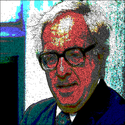
Ray Bradbury

Ray Bradbury

1,603quotes

Ray Bradbury: A Literary Luminary


Full Name and Common Aliases

Ray Douglas Bradbury, often simply referred to as Ray Bradbury, was a towering figure in the world of literature. Known for his vivid imagination and profound storytelling, Bradbury's name is synonymous with science fiction and fantasy.

Birth and Death Dates

Ray Bradbury was born on August 22, 1920, and passed away on June 5, 2012. His life spanned nearly a century, during which he witnessed and chronicled the rapid technological and cultural changes of the 20th century.

Nationality and Profession(s)

Ray Bradbury was an American author and screenwriter. His work primarily encompassed the genres of science fiction, fantasy, horror, and mystery. Bradbury's ability to weave intricate tales that explored the human condition made him a beloved figure in American literature.

Early Life and Background

Ray Bradbury was born in Waukegan, Illinois, to Esther Moberg Bradbury and Leonard Spaulding Bradbury. His early years were marked by a deep love for reading and storytelling, nurtured by his family's encouragement and the rich tapestry of his small-town surroundings. The Bradbury family moved to Los Angeles in 1934, a transition that exposed young Ray to the burgeoning film industry and the vibrant cultural scene of the city.

Bradbury's passion for writing was evident from a young age. He spent countless hours at the local library, devouring books and honing his craft. Despite the financial hardships of the Great Depression, Bradbury's determination to become a writer never wavered. He graduated from Los Angeles High School in 1938 but did not attend college, choosing instead to educate himself through voracious reading and writing.

Major Accomplishments

Ray Bradbury's career was marked by numerous accomplishments that solidified his status as a literary icon. He published over 30 books and more than 600 short stories, essays, and plays. His work has been translated into over 40 languages, reaching a global audience and influencing countless readers and writers.

Bradbury's ability to blend speculative fiction with profound philosophical and social commentary earned him numerous accolades. He received the National Medal of Arts in 2004, the Pulitzer Prize Special Citation in 2007, and the French Commandeur Ordre des Arts et des Lettres, among many other honors.

Notable Works or Actions

Among Ray Bradbury's most celebrated works is "Fahrenheit 451," a dystopian novel published in 1953. The book explores themes of censorship, conformity, and the power of literature, resonating with readers across generations. "The Martian Chronicles," published in 1950, is another seminal work that combines science fiction with poignant reflections on human nature and colonization.

Bradbury's short story collections, such as "The Illustrated Man" and "The October Country," showcase his mastery of the short form, offering readers a diverse array of tales that range from the eerie to the thought-provoking. His screenplay for the 1956 film adaptation of "Moby Dick" and his work on the television series "The Ray Bradbury Theater" further demonstrate his versatility and influence in the realm of visual storytelling.

Impact and Legacy

Ray Bradbury's impact on literature and popular culture is immeasurable. His works have inspired generations of writers, filmmakers, and artists, shaping the landscape of science fiction and fantasy. Bradbury's exploration of timeless themes such as the dangers of technological advancement, the importance of imagination, and the resilience of the human spirit continues to resonate with audiences today.

Bradbury's legacy extends beyond his written works. He was a passionate advocate for libraries and the power of reading, often speaking about the transformative impact of literature on individuals and society. His dedication to the craft of writing and his belief in the importance of creativity have left an indelible mark on the literary world.

Why They Are Widely Quoted or Remembered

Ray Bradbury is widely quoted and remembered for his ability to articulate complex ideas with clarity and elegance. His quotes often capture the essence of his philosophical musings, offering insights into the human experience and the world around us. Bradbury's words continue to inspire and provoke thought, encouraging readers to reflect on their own lives and the society they inhabit.

His memorable quotes, such as "You don't have to burn books to destroy a culture. Just get people to stop reading them," serve as powerful reminders of the enduring relevance of his work. Bradbury's legacy as a visionary storyteller and a champion of the written word ensures that his voice will continue to echo through the ages, inspiring future generations to dream, imagine, and create.

Quotes by Ray Bradbury

Ray Bradbury's insights on:

"
We are cups, constantly and quietly being filled. The trick is knowing how to tip ourselves over and let the beautiful stuff out.
"
You have got to jump off the cliff and build your wings on the way down.
"
Without libraries what have we? We have on past and no future.
"
Jump, and you will find out how to unfold your wings as you fall
"
Any man who keeps working is not a failure. He may not be a great writer, but if he applies the old-fashioned virtues of hard, constant labor, he'll eventually make some kind of career for himself as writer.
"
You cannot hold a computer in your hand like you can a book.
"
A computer does not smell, if a book is new, it smells great.
"
Don't think! Thinking is the enemy of creativity. It's self-conscious, and anything self-conscious is lousy. You can't try to do things; you simply must do them.
"
In our time this search (for extraterrestrial life) will eventually change our laws, our religions, our philosophies, our arts, our recreations, as well as our sciences. Space, the mirror, waits for life to come look for itself there.
"
I know you've heard it a thousand times before. But it's true—hard work pays off. If you want to be good, you have to practice, practice, practice. If you don't love something, then don't do it.
Showing 1 to 10 of 1,603 results