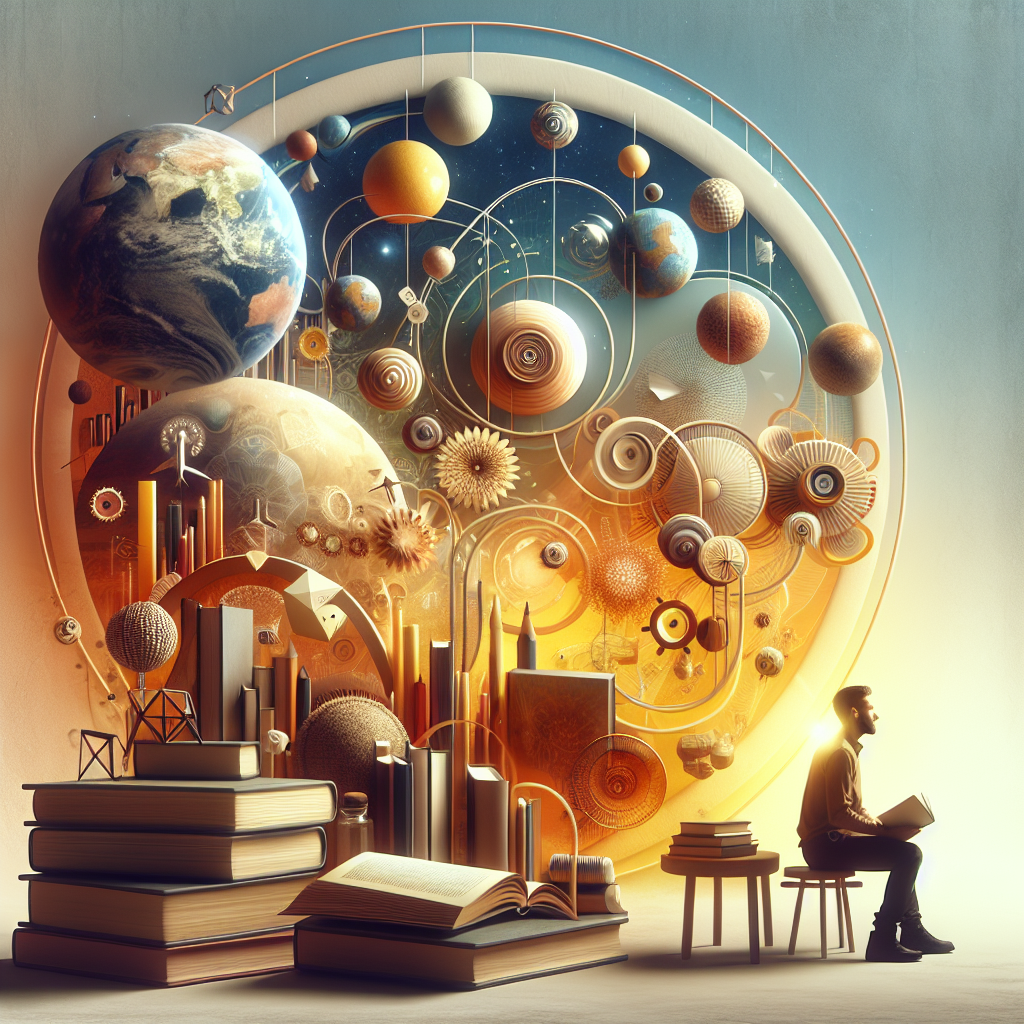
Best Books As Civilization Carriers Quotes
Books As Civilization Carriers
Table of Contents
- Books as Preservation of Knowledge and History
- Books as Tools for Learning and Personal Growth
- Books as Cultural and Societal Shapers
- Books vs. Modern Technology and Media
- The Role of Books in Education
- Books as Inspiration and Change Agents
- Books as a Reflection of Society
- Books and Their Impact on Civilization's Development
- Other
Books as Preservation of Knowledge and History
Books are precious things, but more than that, they are the strong backbone of civilization. They are the thread upon which it all hangs, and they can save us when all else is lost.
Books are the carriers of civilization. Without books, history is silent, literature is dumb, science is crippled, thought and speculation at a standstill. They are engines of change, windows on the world, lighthouses erected in the sea of time.
Books contain our history; our brains swarm with memories.
Without books we should very likely be a still-primitive people living in the shadow of traditions that faded with years until only a blur remained, and different memories would remember the past in different ways. A parent or a teacher has only his lifetime; a good book can teach forever.
Books are carriers of civilization. Without books, history is silent, literature dumb, science crippled, thought and speculation at a standstill. They are engines of change, windows of the world, lighthouses erected in the sea of time.
If there are no books. There is no civilization.
Books are the building blocks of civilization, for without the written word, a man knows nothing beyond what occurs during his own brief years and, perhaps, in a few tales his parents tell him.
Without books we're a very uneducated society. Think of the places books have taken us, the people we've been introduced to (fiction or non-fiction) and how books have allowed us to broaden our vocabulary.
Without books the development of civilization would have been impossible. They are the engines of change, windows on the world, "Lighthouses" as the poet said "erected in the sea of time." They are companions, teachers, magicians, bankers of the treasures of the mind, Books are humanity in print.
Man was very fortunate to have invented the book. Without it, the past would completely vanish, and we would be left with nothing, we would be naked on earth.
Without books the development of civilization would have been impossible. They are the engines of change, windows on the world, “Lighthouses” as the poet said “erected in the sea of time.” They are companions, teachers, magicians, bankers of the treasures of the mind, Books are humanity in print.
Books served to keep hard-won knowledge safe. They endured. Books could almost be immortal.
Books as Tools for Learning and Personal Growth
The cold reality is that much of the valuable information relevant to our intellectual, personal, and academic development is locked within the covers of books in the code of written language. (pg. 144)
Too many scholars think of research as purely a cerebral pursuit. If we do nothing with the knowledge we gain, then we have wasted our study. Books can store information better than we can--what we we do that books cannot is interpret. So if one is not going to draw conclusions, then one might as well just leave the information in the texts.
Not a day goes by, without thinking, that books are our future, not technology.
Books are important, and so serious intellectual attention to them is important. While promplty published scholarly articles are also important, the book format remains the only format that allows scholars, in every field and from every prespective, to take the time and space to develop an argument in depth. Books are at the heart of political science. Important books help to create new research agendas.
I can only think that the book is read because it deals with the difficulties of schooling, which do not change. Please note: the difficulties, not the problems. Problems are solved or disappear with the revolving times. Difficulities remain. It will always be difficult to teach well, to learn accurately; to read, write, and count readily and competently; to acquire a sense of history and start one's education or anothers.
A good part of 'The Information' is about the transition from an oral to a literary culture. Books effected such a great transformation in the way we think about the world, our history, our logic, mathematics, you name it. I think we would be greatly diminished as a people and as a culture if the book became obsolete.
Every book that anyone sets out on is a voyage of discovery that may discover nothing. Any voyager may be lost at sea, like John Cabot. Nobody can teach the geography of the undiscovered. All he can do is encourge the will to explore, plus impress upon the inexperienced a few of the dos and don'ts of voyaging.
The most striking fact about contemporary university students is that there is no longer any canon of books which forms their taste and imagination... This state of affairs itself reflects the deeper fact of the decay of the common understanding of – and agreement on – first principles that is characteristic of our times.
Within their pages, books contain the wisdom of the people who wrote them. Books never lose their memory.
I know in this time of great technological advancement, the idea of reading a book seems almost anachronistic, but I think it’s worth preserving.
I think that books are fundamentally educational.
While confronting the problems of the present, I often find myself thinking back to the world of books as it was experienced by the Founding Fathers and the philosophers of the Enlightenment.
Books as Cultural and Societal Shapers
Books are lasting longer than (built) architecture. Most of my important projects may never be built, so buildings are important, artifacts are important, but so are books
Of course you should study whatever you want. The written appreciation and understanding of literature, or any kind of artistic endeavour, is absolutely central to a decent society. Why d'you think books are the first things that the fascists burn?
What society doesn't realize is that in the past, ordinary people respected learning. They respected books, and they don't now, or not very much. That whole respect for serious literature and learning has disappeared.
Books are the building blocks of civilization and a people without books are a people without history, a people with no story older than the tales of the oldest man or woman.
Al forms of consensus about ''great'' books and ''perennial'' problems, once stabilized, tend to deteriorate eventually into something philistine. The real life of the mind is always at the frontiers of ''what is already known.'' Those great books don't only need custodians and transmitters. To stay alive, they also need adversaries. The most interesting ideas are heresies.
Books are the carriers of civilization. Without books, history is silent, literature dumb, science crippled, thought and speculation at a standstill. Without books, the development of civilization would have been impossible. They are engines of change (as the poet said), windows on the world and lighthouses erected in the sea of time. They are companions, teachers, magicians, bankers of the treasures of the mind. Books are humanity in print.
People need books, but they don’t know they need them. Generally they are not aware that the books they need are in existence. – Roger Mifflin.
A steady flow of complaints about the proliferation of books reverberated into the late 1600s. Intellectuals warned that people would stop talking to each other, burying themselves in books, polluting their minds with useless, fatuous ideas.
Books join us together as a global reading community, but more important, a global human community striving to learn from the past. What.
Books are a sort of cultural DNA, the code for who, as a society, we are, and what we know. All the wonders and failures, all the champions and villains, all the legends and ideas and revelations of a culture last forever in its books.
To put it simply, we think books are too important to leave to writers, and we want the wisest, most experienced, most knowledgeable people on earth to be able to effectively and easily share their wisdom with the world.
You can do so much crazy stuff with books that isn't necessarily being done. That's how culture stays alive - by doing new things with it.
Books vs. Modern Technology and Media
Most Amerikans do not read books--they prefer television. Academics lock books in a tangled web of mindfuck and abstraction. The notion is that there are ideas, then art, then somewhere else, unrelated, life.
when we had all the books we needed, we still insisted on finding the highest cliff to jump off. But we do need a breather. We do need knowledge. And perhaps in a thousand years we might pick smaller cliffs to jump off. The books are to remind us what asses and fools we are.
Not a day goes by, without thinking, that books are our future, not technology.
When I wonder what the future of books will be, I often think about horses. Before automobiles existed, everyone had a horse. Then cars became available, and their convenience, compared to horses, was undeniable.
I know in this time of great technological advancement, the idea of reading a book seems almost anachronistic, but I think it's worth preserving.
Books of natural history aim commonly to be hasty schedules, or inventories of God's property, by some clerk. They do not in the least teach the divine view of nature, but the popular view, or rather the popular method of studying nature, and make haste to conduct the persevering pupil only into that dilemma where the professors always dwell.
What society doesn’t realize is that in the past, ordinary people respected learning. They respected books, and they don’t now, or not very much. That whole respect for serious literature and learning has disappeared.
I know in this time of great technological advancement, the idea of reading a book seems almost anachronistic, but I think it’s worth preserving.
Books are sharks... because sharks have been around for a very long time. There were sharks before there were dinosaurs, and the reason sharks are still in the ocean is that nothing is better at being a shark than a shark.
I don't see why a book shouldn't be intellectually sound, entertaining, and fun to read. Historians who write academic history, which is unreadable, are basically wasting their time.
The Role of Books in Education
There are two kinds of books in the world--the boring kind they make you read in school and the interesting kind that they won't let you read in school because then they would have to talk about real stuff like sex and divorce and is there a God and if there isn't then what happens when you die, and how come the history books have so many lies in them.
In old days books were written by men of letters and read by the public. Nowadays books are written by the public and read by nobody.
You know, I always think about going back to college. Just to catch up on all those books that supposedly shape our lives but nobody ever reads.”“Yeah? Like what?”. . . “Well, there’s the Bible. You ever read it?”“Parts,” said Lewis.“Well, this whole wrecked civilization is based on a book most people have only read parts of.
Classics aren't books that are read for pleasure. Classics are books that are imposed on unwilling students, books that are subjected to analyses of "levels of significance" and other blatt, books that are dead.
I can only think that the book is read because it deals with the difficulties of schooling, which do not change. Please note: the difficulties, not the problems. Problems are solved or disappear with the revolving times. Difficulities remain. It will always be difficult to teach well, to learn accurately; to read, write, and count readily and competently; to acquire a sense of history and start one's education or anothers.
Classics are books which, the more we think we know them through hearsay, the more original, unexpected, and innovative we find them when we actually read them.
The books we are required to teach frequently have nothing to do with anything except the fact that they have always been taught, or that there is an oversupply of them, or that some committee or other was asked to come up with some titles.
Textbooks in American history stand in sharp contrast to other teaching materials. Why are history textbooks so bad? Nationalism is one of the culprits. Textbooks are often muddled by the conflicting desires to promote inquiry and to indoctrinate blind patriotism.
Textbooks in American history stand in sharp contrast to other teaching materials. Why are history textbooks so bad? Nationalism is one of the culprits. Textbooks are often muddled by the conflicting desires to promote inquiry and to indoctrinate blind patriotism. “Take a look in your history book, and you’ll see why we should be proud” goes an anthem often sung by high school glee clubs. But we need not even look inside.
All books have to be researched, but readable books have their research buried.
Most books are about aspects of human knowledge – Few people write books about human ignorance, despite the fact that there would be much more to write about.
Books as Inspiration and Change Agents
To be able to read the classics you have to know "from where" you are reading them; otherwise both the book and the reader will be lost in a timeless cloud.
More recently, books, especially paperbacks, have been printed in massive and inexpensive editions. For the price of a modest meal you can ponder the decline and fall of the Roman Empire, the origin of species, the interpretation of dreams, the nature of things. Books are like seeds. They can lie dormant for centuries and then flower in the most unpromising soil.
And everywhere, everywhere there were books. Not the tidy stacks of an intellectual trying to impress, but the slumping piles of a scholar obsessed.
Sometimes a book is better than it ever had a right to be because of the history the reader brings to the reading and because of the methods educators use to bring a particular story alive.
What is true for book publishing is true for civilization: the books that survive the test of time are humanity's backlist, our collective memory.
Tradition is but a meteor, which, if it once falls, cannot be rekindled. Memory, once interrupted, is not to be recalled. But written learning is a fixed luminary, after the cloud that had hidden it has passed away, is again bright in its proper station. So books are faithful repositories, which may be awhile neglected or forgotten, but when opened again, will again impart instruction.
A book is one of the most patient of all man's inventions. Centuries mean nothing to a well-made book. It awaits its destined reader, come when he may, with eager hand and seeing eye. Then occurs one of the great examples of union, that of a man with a book, pleasurable, sometimes fruitful, potentially world-changing, simple; and in a library...witho ut cost to the reader.
Do you think that civilization advances because of things written in books? Not a bit of what is written in books ever got there until after the thought of it happened in someone's mind. Someone first had to collect it from space, or recollect it from its electrical pattern to which he (or she) had been attuned. The book is but a record of what has already happened.
A contemporary or near-future book is much harder because you can’t fake the facts. There are people alive who know much more than you do about the subject. You have to really have your research together – and of course no one can know everything about a topic.
To put it simply, we think books are too important to leave to writers, and we want the wisest, most experienced, most knowledgeable people on earth to be able to effectively and easily share their wisdom with the world.
Books as a Reflection of Society
Books may be irrelevant until it's relevance, importance and purpose is discovered through reading
The books that influence the world are those that it has not read.
Someday when we get around to writing a genealogy of our failures, inadequacies, and disappointments, an important place in such a study will be the books we never read, for whatever reason. Aside from the music we never listened to, the movies we never watched, or the old archives and maps we never explored, the books we never read will be one of the indicators of our anachronisms and our flawed humanity.
Because reading books and having them bound represent two enormously different stages of development. First, people gradually get used to reading, over centuries naturally, but they don't take care of their books and toss them around. Having books bound signifies respect for the book; it indicates that people not only love to read, but they view it an important occupation. Nowhere in Russia has that stage been reached. Europe has been binding its books for sometime.
Some will read only old books, as if there were no valuable truths to be discovered in modern publications: others will only read new books, as if some valuable truths are not among the old. Some will not read a book because they know the author: others . . . would also read the man.
A people's literature is the great textbook for real knowledge of them. The writings of the day show the quality of the people as no historical reconstruction can.
Books are the money of Literature, but only the counters of Science.
Some books are not read in the right way because they have skipped a stage of opinion, assume a crystallization of information in society which has not yet taken place.
Jackson of course knew that books existed because people sat down and wrote them. They didn’t just appear out of the blue. But why, was the question. There were books already in existence, plenty of them. Two of which he had to read at school. A Tale of Two Cities and Huckleberry Finn, each of them with language that wore you down though in different ways. And that was understandable. They were written in the past.
We still have books because they are so brilliantly suited to the way human beings absorb information and at their best, they are among the most beautiful things we have.
Of course you should study whatever you want. The written appreciation and understanding of literature, or any kind of artistic endeavour, is absolutely central to a decent society. Why d’you think books are the first things that the fascists burn?
Books and Their Impact on Civilization's Development
Why read the current generation of text books when you have the ability to research and write the next generation of text books.
A book may be regarded as irrelevant until it's relevance, importance and purpose is discovered through reading
As long as the centuries continue to unfold, the number of books will grow continually, and one can predict that a time will come when it will be almost as difficult to learn anything from books as from the direct study of the whole universe. It will be almost as convenient to search for some bit of truth concealed in nature as it will be to find it hidden away in an immense multitude of bound volumes.
In my mind, there is no question that they're out there. My Career is well established. My texts books are required reading in all the major capitals on planet earth. If you want to become a physist to learn about the unified feild therory-you read my books. Therefore, I'm in a position to say: Yes- Most likely they're out their, perhaps even visited, perhaps on our moon.
A contemporary or near-future book is much harder because you can't fake the facts. There are people alive who know much more than you do about the subject. You have to really have your research together - and of course no one can know everything about a topic.
Books can store information better than we can – what we do that books cannot is interpret. So if one is not going to draw conclusions, then one might as well just leave the information in the texts.
Too many scholars think of research as purely a cerebral pursuit. If we do nothing with the knowledge we gain, then we have wasted our study. Books can store information better than we can – what we do that books cannot is interpret.
Literature is the memory of humanity. Anyone who writes remember, and anyone who reads takes part in these expriences. Books can be reprinted. The fact is, there are archival copies of books. Not of people.
In ‘The Plato Papers’ I wanted to get another perspective on the present moment by extrapolating into the distant future. So in that sense, there’s a definite similarity of purpose between a book set in the future and a book set in the past.
You can do so much crazy stuff with books that isn't necessarily being done. That's how culture stays alive - by doing new things with it.
Other
The ordering of knowledge has changed with the centuries. All knowledge was once ordered in relation to the seven liberal arts— grammar, rhetoric, and logic, the trivium; arithmetic, geometry astronomy, and music, the quadrivium. Medieval encyclopedias reflected this arrangement. Since the universities were arranged according to the same system, and students studied according to it also, the arrangement was useful in education.[How to Read a Book (1972), P. 180]
Museums tell stories so much better than textbooks do. And that's what history is, isn't it? It's just a really big story. That's what makes it important. And museums get that. Textbooks don't.
We did not have books on Emerson. That place where we lost our language, lost ourselves. They told us we had no history but darkness, so they kept the books away for fear we might understand the truth better, and thus find those lost selves.
Books have immortalized great minds. Books have kept ancients secrets alive. A world which least value books, least value the real essence of wisdom and least know how to preserve what is precious!
And when the war's over, some day, someyear, the books can be written again, the people will be called in, one by one, to recite what they know and we'll set it up in type until another Dark age.
Books are the carriers of civilization. Without books, history is silent, literature dumb, science crippled, thought and speculation at a standstill.
The would-be students wish to transcend books.But, ask yourselves: if someone says that books do not contain wisdom, and yet he writes books; books do not contain Sufism, and yet he continues to publish books on Sufism, what is really happening? It really is your duty, and not mine, to ask and to find the answer to that question, if you are interested enough.
Manuscripts - at least for Muslims who understand the subject - are to be read as books whose contents are to be known and understood, for that is why they were written, and not to be regarded as enigmatic specimens for critical textual and philological exercises. To them what is in the manuscripts is more important than what is on them, and so they say: Al-'ilmu fi'l-sudur la fi'l-sutur.
In 'The Plato Papers' I wanted to get another perspective on the present moment by extrapolating into the distant future. So in that sense, there's a definite similarity of purpose between a book set in the future and a book set in the past.
The assumption is 'Oh, everybody has books and they're all going to read them tomorrow.' But there are those among our resident regular population who do not have that skill, and it's a tremendous disadvantage.
Virginia Woolf came along in the early part of the century and essentially said through her writing, yes, big books can be written about the traditional big subjects. There is war. There is the search for God. These are all very important things.
Let's face it: It was the disappearance of the century. People just stick a chapter in a book saying they know what happened, and the book sells.
Most books, after all, are ephemeral; their specifics, several years later, inspire about as much interest as daily battle reports from the Hundred Years' War.
Every so often a book comes along that has the power to alter the course of history. Project Animal Farm is that potent.
Physical artifacts carry memory and meaning, and this is as true of important historical texts as it is of cherished childhood books.
To be able to read the classics you have to know “from where” you are reading them; otherwise both the book and the reader will be lost in a timeless cloud.
More Collections
Friendship Quotes Hub
Sports Team Confidence & Success Quotes
Persistence and Progress

Best Limited Social Circles Quotes
Best Life Quotes
Best Intense Rivalry Games Quotes
Related Articles
Patrick Wright
Software engineer and creator of Quotesperation. I curate wisdom from history's greatest minds to inspire and guide modern life. When I'm not collecting quotes, I'm writing about technology and finding connections between timeless wisdom and today's challenges.