Best Reader-Book Interaction Dynamics Quotes
Reader-Book Interaction Dynamics
Table of Contents
- Completion and Incompletion of Books
- Length and Structure of Books
- Emotional Impact and Reflection
- The Reader's Experience
- Writing and Creative Process
- Books as Bridges and Connections
- Philosophical Reflections on Books
- Other
Completion and Incompletion of Books
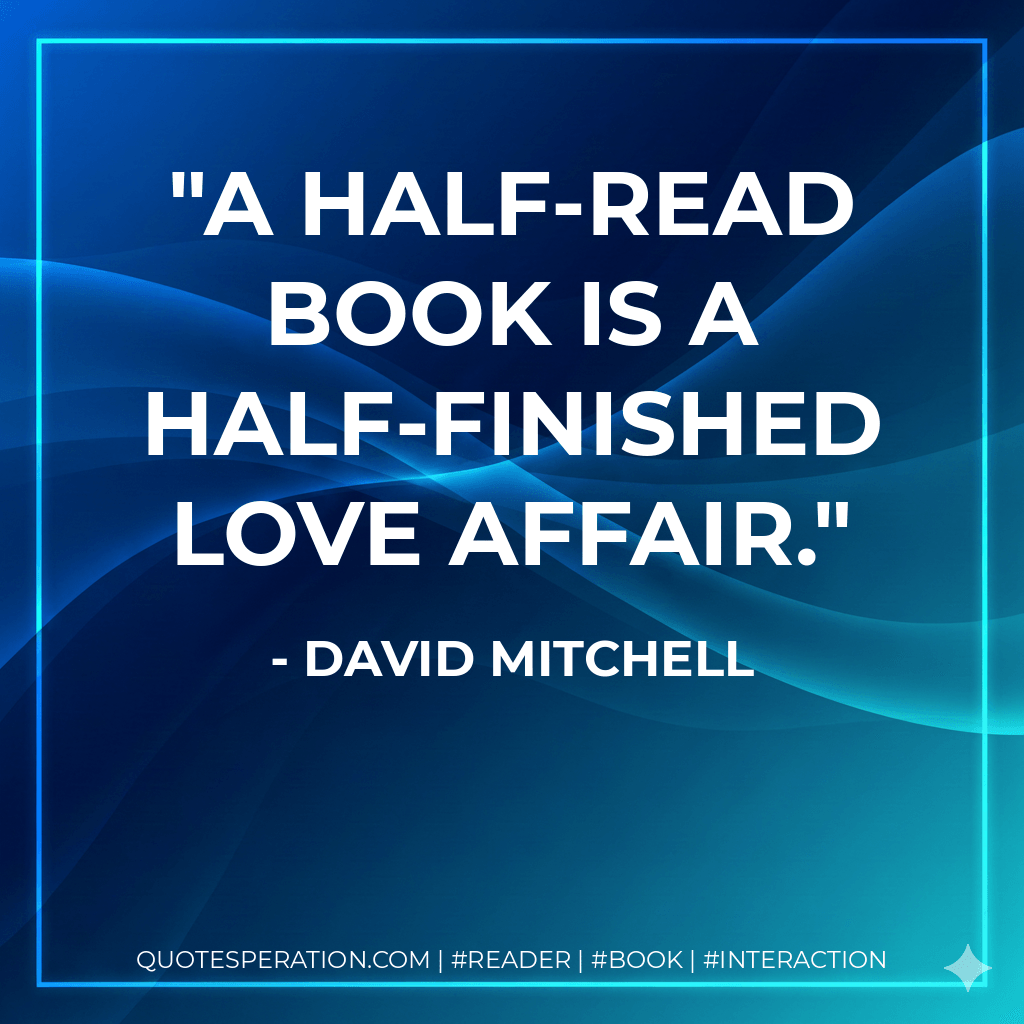
A half-read book is a half-finished love affair.
The problem with books is that they end.
A book you finish reading is not the same book it was before you read it.
A book is not completed till it's read.
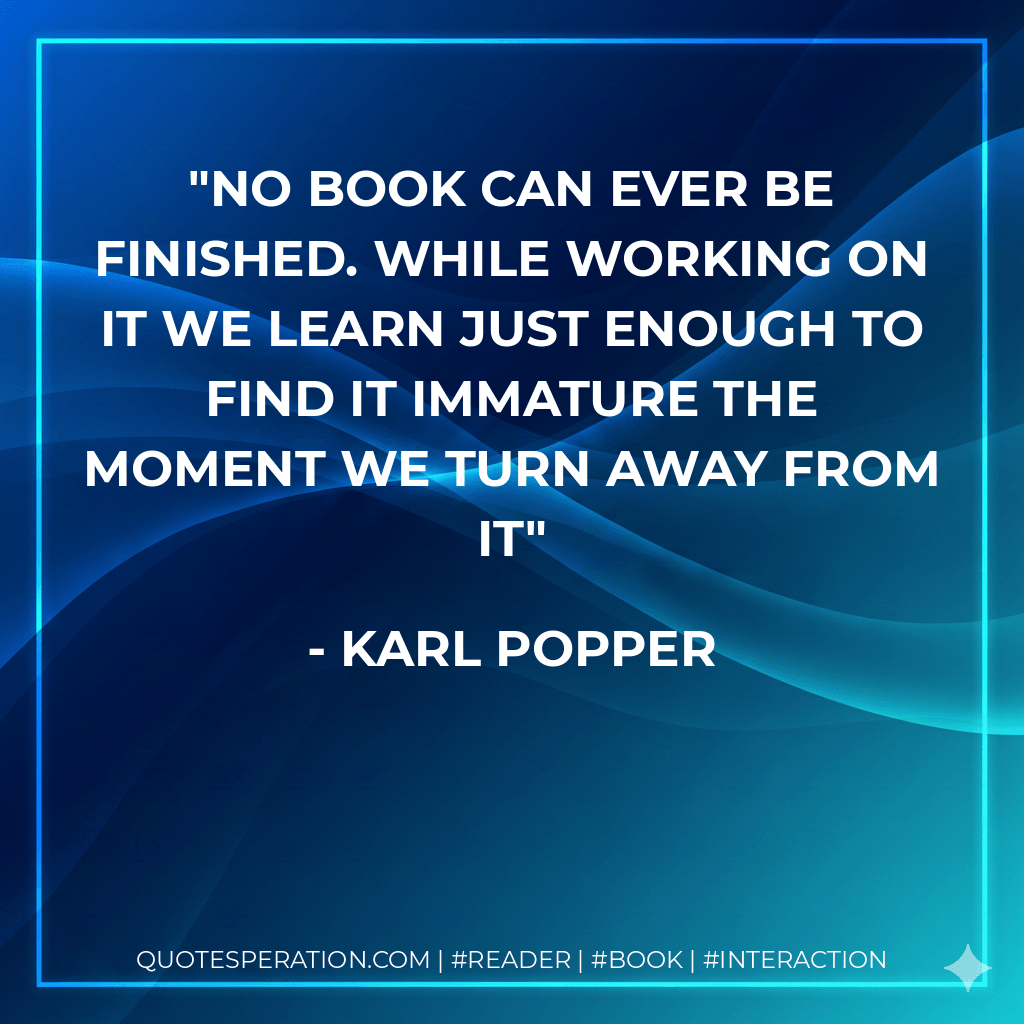
No book can ever be finished. While working on it we learn just enough to find it immature the moment we turn away from it
Finishing a book is just like you took a child out in the back yard and shot it.
A book is never finished; it's abandoned.
A book is not complete until it’s read
A book is completed only when it is finished by a reader.
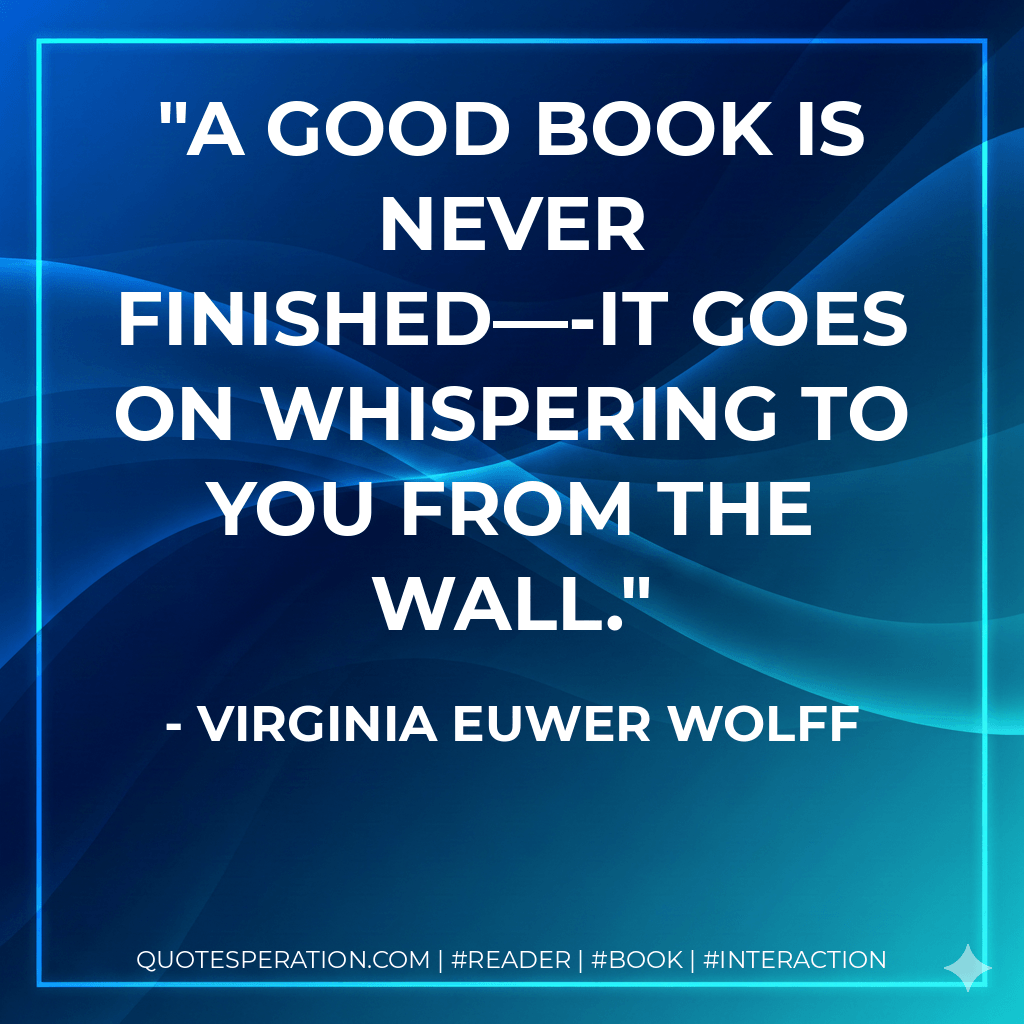
A good book is never finished—-it goes on whispering to you from the wall.
Finished’ is not an adjective that describes a book that has been read to the point you think you cannot read it anymore. Books never run out.
A book is never finished; it’s abandoned.
Length and Structure of Books
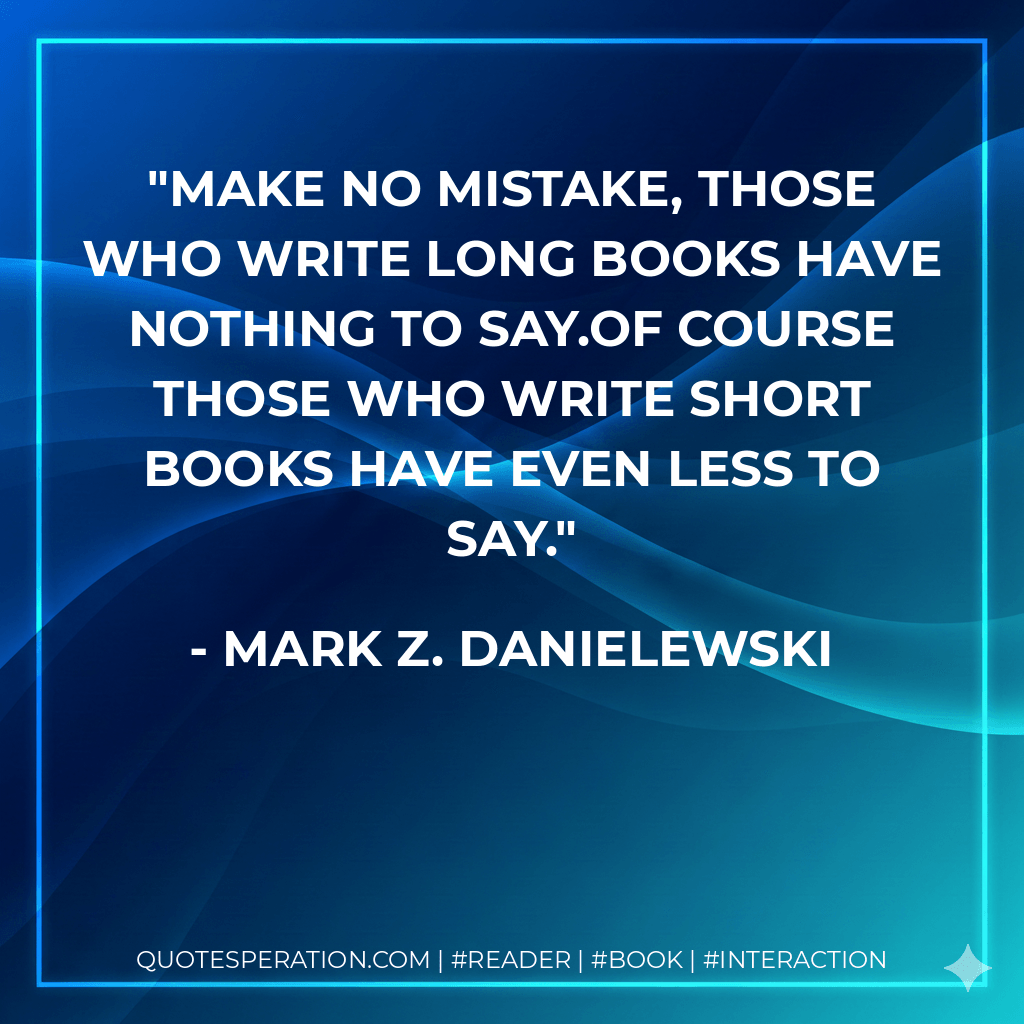
Make no mistake, those who write long books have nothing to say.Of course those who write short books have even less to say.
It's my contention that each book creates its own structure and its own length. I've written three or four slim books. It may be that the next novel is a big one, but I don't know.
In a way, the main fault of all books is that they are too long.
Everybody thinks that an important book has to be a big, long book.
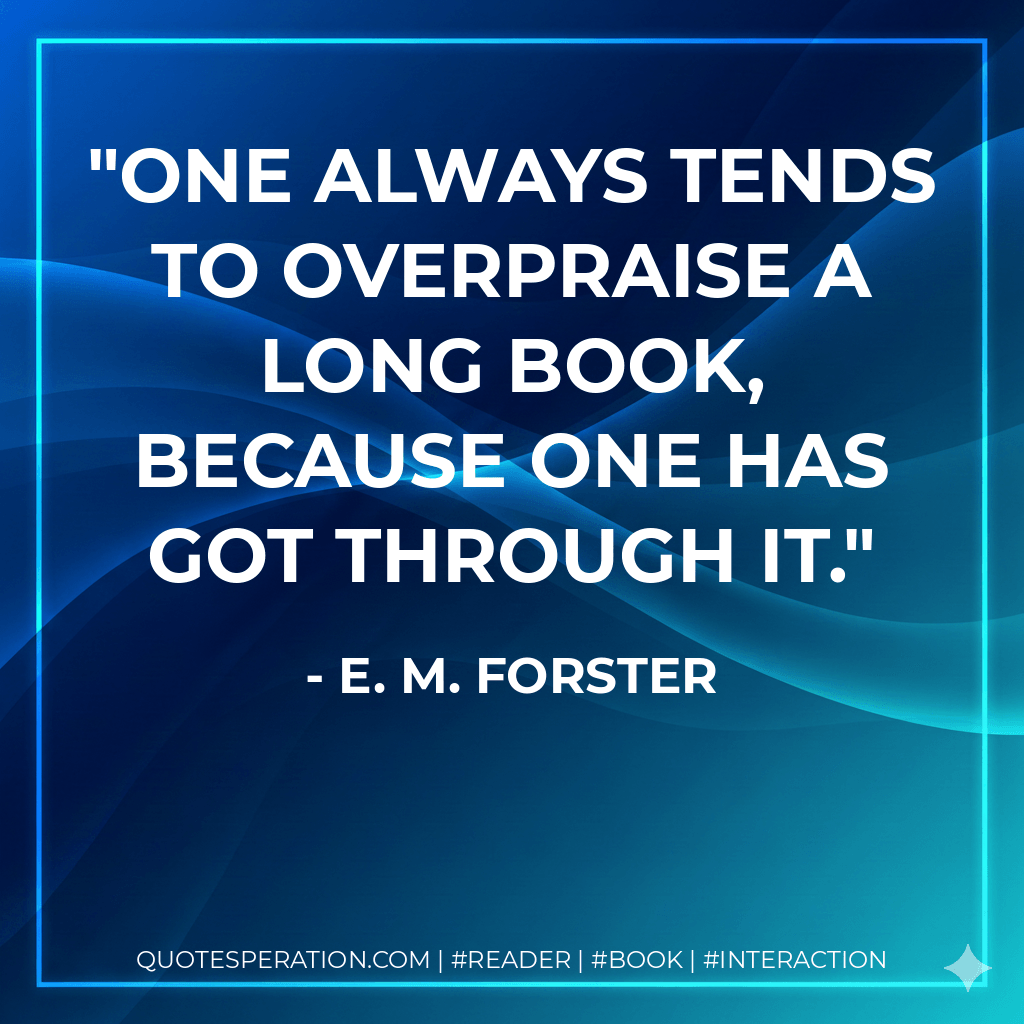
One always tends to overpraise a long book, because one has got through it.
Granted, a long book can be as daunting as a hard one. I nearly reached for 'Game of Thrones' until I saw the bookshelf sagging under the burden of those other volumes.
It’s my contention that each book creates its own structure and its own length. I’ve written three or four slim books. It may be that the next novel is a big one, but I don’t know.
Yes, you are in your room, calm; you open the book to page one, no, to the last page, first you want to see how long it is. It’s not too long, fortunately. Long novels written today are perhaps a contradiction: the dimension of time has been shattered, we cannot love or think except in fragments of time each of which goes off along its own trajectory and immediately disappears.
I had no idea how long books were supposed to be.
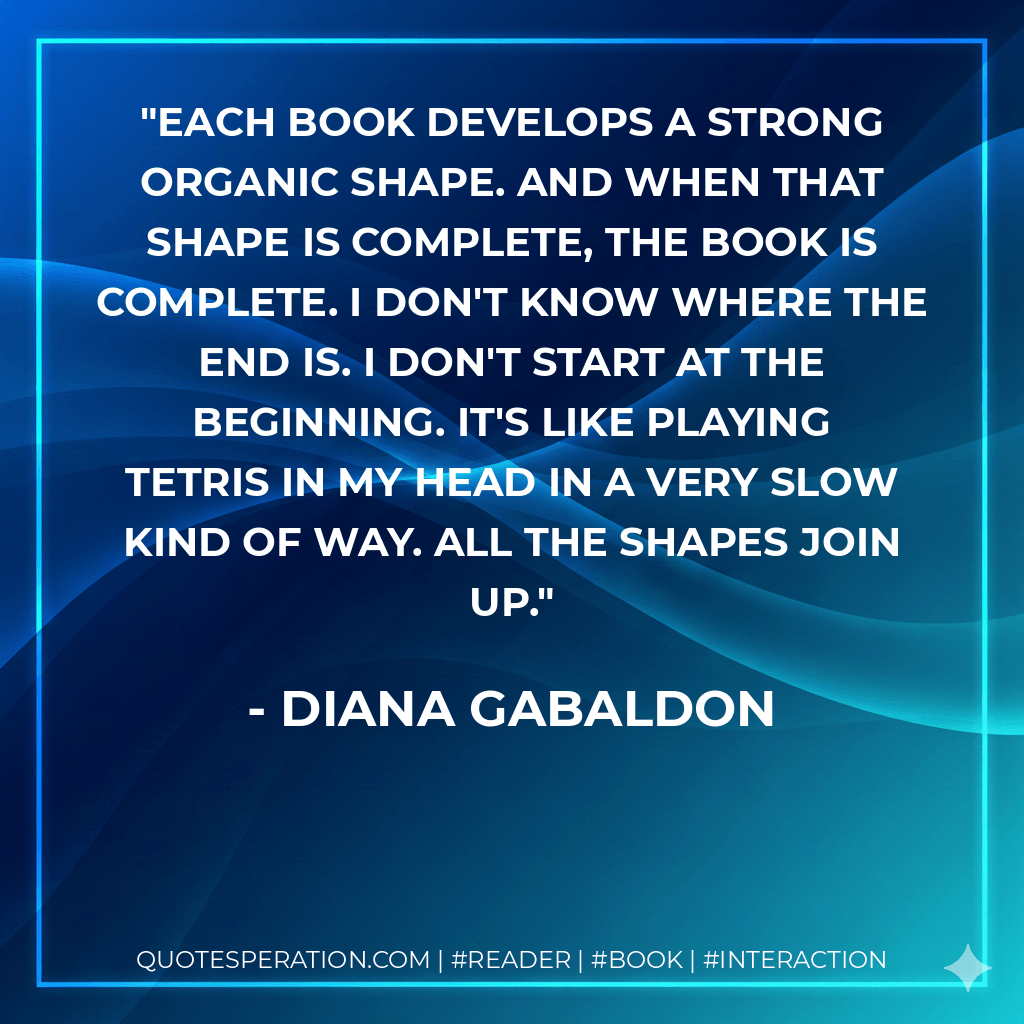
Each book develops a strong organic shape. And when that shape is complete, the book is complete. I don't know where the end is. I don't start at the beginning. It's like playing Tetris in my head in a very slow kind of way. All the shapes join up.
I'm a big believer in big books, and that doesn't necessarily mean long books.
I was very anxious when I was writing 'Oscar And Lucinda.' I would take other books off the shelf to check my chapter length was OK.
Emotional Impact and Reflection
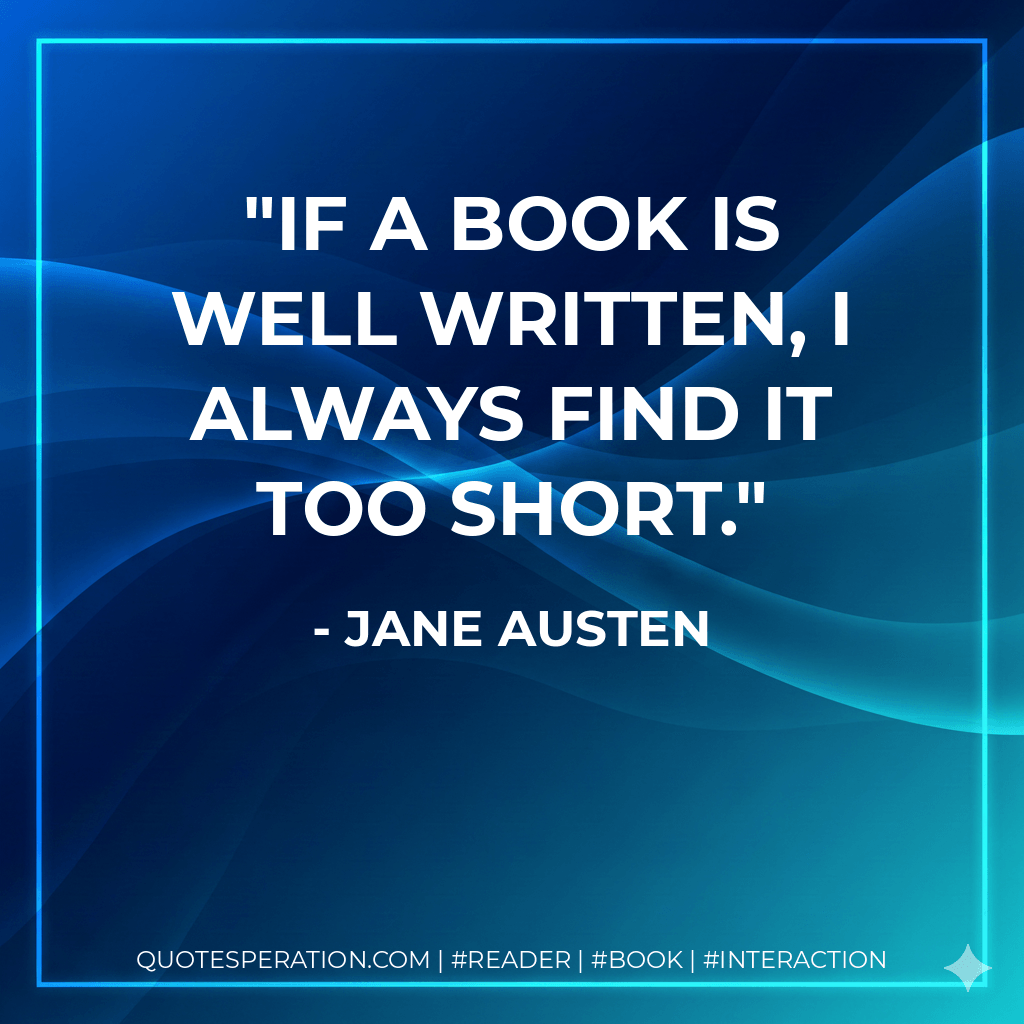
If a book is well written, I always find it too short.
I guess that’s the beauty of books. When they finish they don’t really finish.
About half a second after finishing your book, after reading the very last word, the reader should be overwhelmed by a particular feeling. For a moment he should think only of what he has just read; he should look at the jacket and smile a little sadly because he is already missing all the characters. A good book, Marcus, is a book you are sorry has ended.
Even at the moment when the last page is turned, a great part of the book, its finer detail, is already vague and doubtful. A little later, after a few days or months, how much is really left of it?
Few things linger longer or become more indwelling than that feeling of both completion and emptiness when a great book ends. That the book accompanies the reader forever from that day forward is part of literature's profligate generosity.
A book that is shut is but a block.
The closure of the book is an illusion largely created by its materiality, its cover. Once the book is considered on the plane of its significance, it threatens infinity.
A good book is never finished—-it goes on whispering to you from the wall.
Few things linger longer or become more indwelling than that feeling of both completion and emptiness when a great book ends. That the book accompanies the reader forever from that day forward is part of literature’s profligate generosity.
A good book is never finished – -it goes on whispering to you from the wall.
The Reader's Experience
A book is not complete till it reaches a reader.
If you keep a book too far or too close, you cannot read it properly .......... It has to be at an optimum distance!
I love to read, and I don't believe that you have to finish one book before you start another.--Mallory Pike
You can't know what a book is about until the very end. This is true of a book we're reading or writing.
And okay, fair enough, but there is this unwritten contract between author and reader and I think not ending your book kind of violates that contract.
Never read a book to the end, nor even in sequence and without skipping.
The way to finish the book is to turn down the volume on the stuff that’s all about how other people react.
You can’t know what a book is about until the very end. This is true of a book we’re reading or writing.
You can’t know a book until you come to the end of it, and then all the rest must be modified to fit that.
Writing and Creative Process
It's my contention that each book creates its own structure and its own length. I've written three or four slim books. It may be that the next novel is a big one, but I don't know.
Only by declaring a book completely finished can one start to see how much remains to be done on it.
My rule has always been, write the next part of the book that you seem to know well. So I won't necessarily write chapter two after chapter one.
You know what writers say about their long books: If I had another year, the book would be half as long.
Sometimes when you finish a book, you don't know quite what you've got.
How long a book tends to illustrate depends on the book. 'The Awful Aunty' took me 10 days.
What doesn’t kill you only makes your book longer.
My rule has always been, write the next part of the book that you seem to know well. So I won’t necessarily write chapter two after chapter one.
Sometimes when you finish a book, you don’t know quite what you’ve got.
Each book develops a strong organic shape. And when that shape is complete, the book is complete. I don't know where the end is. I don't start at the beginning. It's like playing Tetris in my head in a very slow kind of way. All the shapes join up.
Books as Bridges and Connections
A book is not an end in itself; it is only a way to touch someone - a bridge extended across a space of loneliness and obscurity - and sometimes it is a way of winning other people to our causes.
A book that is shut is but a block.
The great thing about books is that you can end with a question mark.
You don't have to resolve every problem of the book at the end, but you do have to resolve some.
The closure of the book is an illusion largely created by its materiality, its cover. Once the book is considered on the plane of its significance, it threatens infinity.
A book is not an end in itself; it is only a way to touch someone – a bridge extended across a space of loneliness and obscurity – and sometimes it is a way of winning other people to our causes.
A book is not completed till it’s read.
Philosophical Reflections on Books
Many books are longer than they seem. They have indeed no end. The boredom that they cause is truly absolute and infinite.
A great book is one, which really don’t finish when it finishes.
Some books are lies frae end to end.
To the makying of bookes of gardenyng there is noe ende.
It's still open. I'm still concerned about it. I can't sit here and say it will be solved. You leave the book open until it's resolved. When that'll happen, who knows? Sometimes, as in the Kaczynski case, sometimes it takes a break.
His book is the result of long.
A book is not complete until it’s read.
No book can ever be finished. While working on it we learn just enough to find it immature the moment we turn away from it.
Of making many books there is no end; and much study is a weariness of the flesh.
Other
And if the book is too silly, I find that it's often because the writer doesn't really have anything to say - or there are no values. Or because the whole book is just a lead-up to a trick at the end. If you read the end first, you may have much less patience for wasting time with that kind of book. Even a well-written book can be silly and a waste of time.
Even the longest book is read and was written one word at a time.
As I recall, you promised to CALL when you finished the book, not text.
Move forward, into the empty plane. Find the book you wrote, and read it until the end, but don't turn the last page yet, keep stalling, see how long you can keep expanding the infinitely expandable moment. Enjoy the elastic present, which can accommodate as little or as much as you want to put in there. Stretch it out, live inside of it.
One of the best things Henry Miller ever said was that art goes all out. It's all out. It goes full length. . . . A big book is an all-out book in which you limit your life to things that pertain directly to the book.
... Once I start a book I finish it. That was the way one was brought up. Books, bread and butter, mashed potato - one finishes what's on one's plate. That's always been my philosophy.
At that point we close the chapter or we close the book.
I threw it and you've got to move on. I would throw it a lot earlier and put it only where Book can get it, maybe high and outside. If it's incomplete, it's incomplete and we move on. When you're in the heat of the moment and you're trying to fit one in, sometimes it's not the greatest thing to do.
Sanity returns (in most cases) when the book is closed.
It doesn't matter how long you've had the book. The fine will be forgiven.
Books are long. Even mine. You don't want to feel bad about them as you're writing them.
The challenge is always to find the good place to end the book. The rule I follow with myself is that every book should end where the next book would logically begin. I know that some readers wish that literally all of the threads would be neatly tied off and snipped, but life just doesn't work that way.
I love to read, and I don't believe that you have to finish one book before you start another. --Mallory Pike
What doesn't kill you only makes your book longer.
There's still a fascination with somebody who can write at book length, no matter what the book is.
How long a book tends to illustrate depends on the book. The Awful Aunty took me 10 days.
This book is an agglomeration of lean-tos and annexes and there is no knowing how big the next addition will be, or where it will be put. At any point, I can call the book finished or unfinished.
A man once told me that all books should end at chapter seventy-seven.
There’s still a fascination with somebody who can write at book length, no matter what the book is.
Make no mistake, those who write long books have nothing to say. Of course those who write short books have even less to say.
No better book ends than two walls.
Books are finished.
Six books after the surprises of 'Full Dark House,' the Bryant and May novels continue to stay within the bounds of formula by straining against them in new ways.
More Collections
Friendship Quotes Hub
Sports Team Confidence & Success Quotes
Persistence and Progress
Best Limited Social Circles Quotes
Best Life Quotes
Best Intense Rivalry Games Quotes
Related Articles
Patrick Wright
Software engineer and creator of Quotesperation. I curate wisdom from history's greatest minds to inspire and guide modern life. When I'm not collecting quotes, I'm writing about technology and finding connections between timeless wisdom and today's challenges.