Best Printed Books Sentimentality Quotes
Printed Books Sentimentality
Table of Contents
- Nostalgia for Physical Books
- Books as Timeless and Persistent
- The Value of Books Beyond Content
- The Reading Experience
- The Physicality of Books
- Books and Technology
- Books' Impact on Society
- Books as Collectibles and Artifacts
- Other
Nostalgia for Physical Books
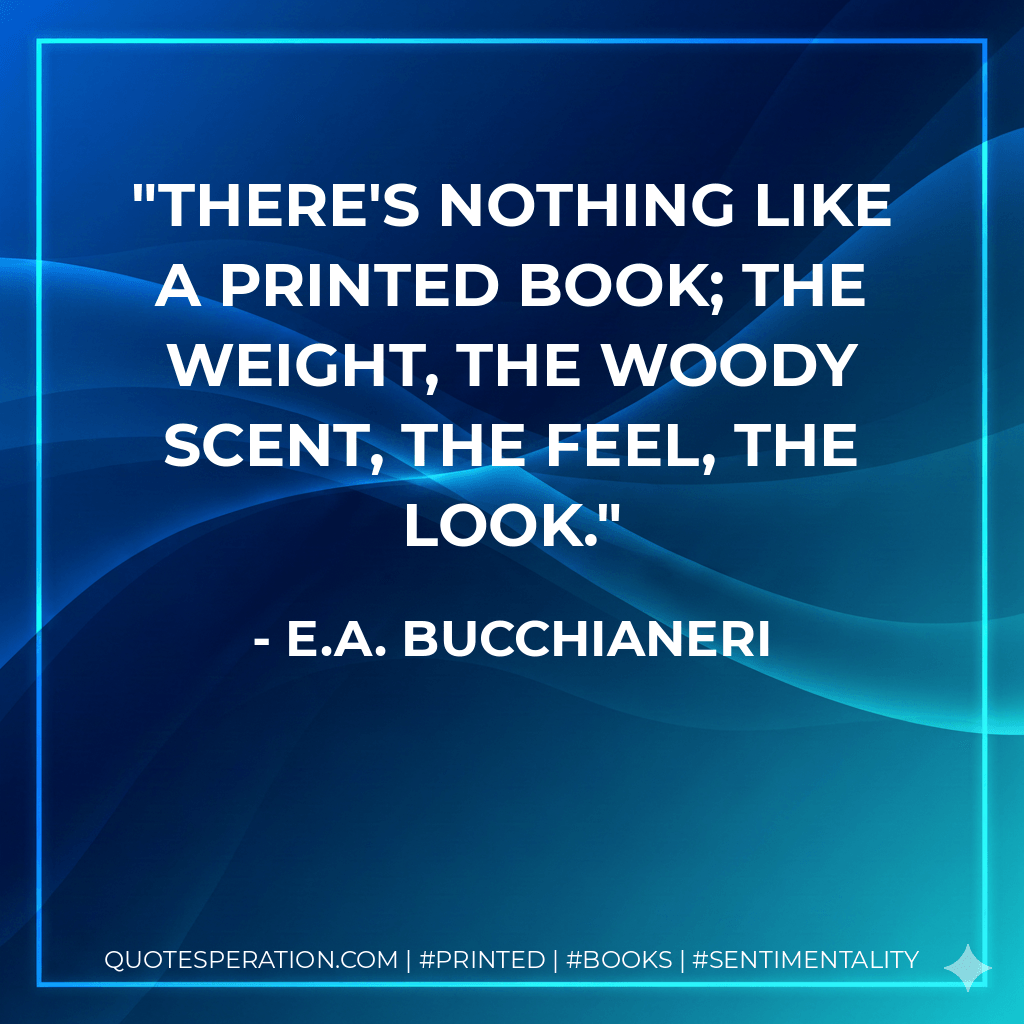
There's nothing like a printed book; the weight, the woody scent, the feel, the look.
Perhaps that is the best way to say it: printed books are magical, and real bookshops keep that magic alive.
I am a bookwith the pages all worn.the cover is tearing,the ink is fading,but I swear I'm worth the read.
Some day, as soon as a book is printed it will be simultaneously put into digital form. That will be a wonderful research tool, but it will never substitute for holding the book. I feel certain that at least within my lifetime, everyone will still be going to the bookstore and buying printed books. Thank God I'll die before I have to worry about whether the printed book itself will disappear. That's something I don't want to live to see.
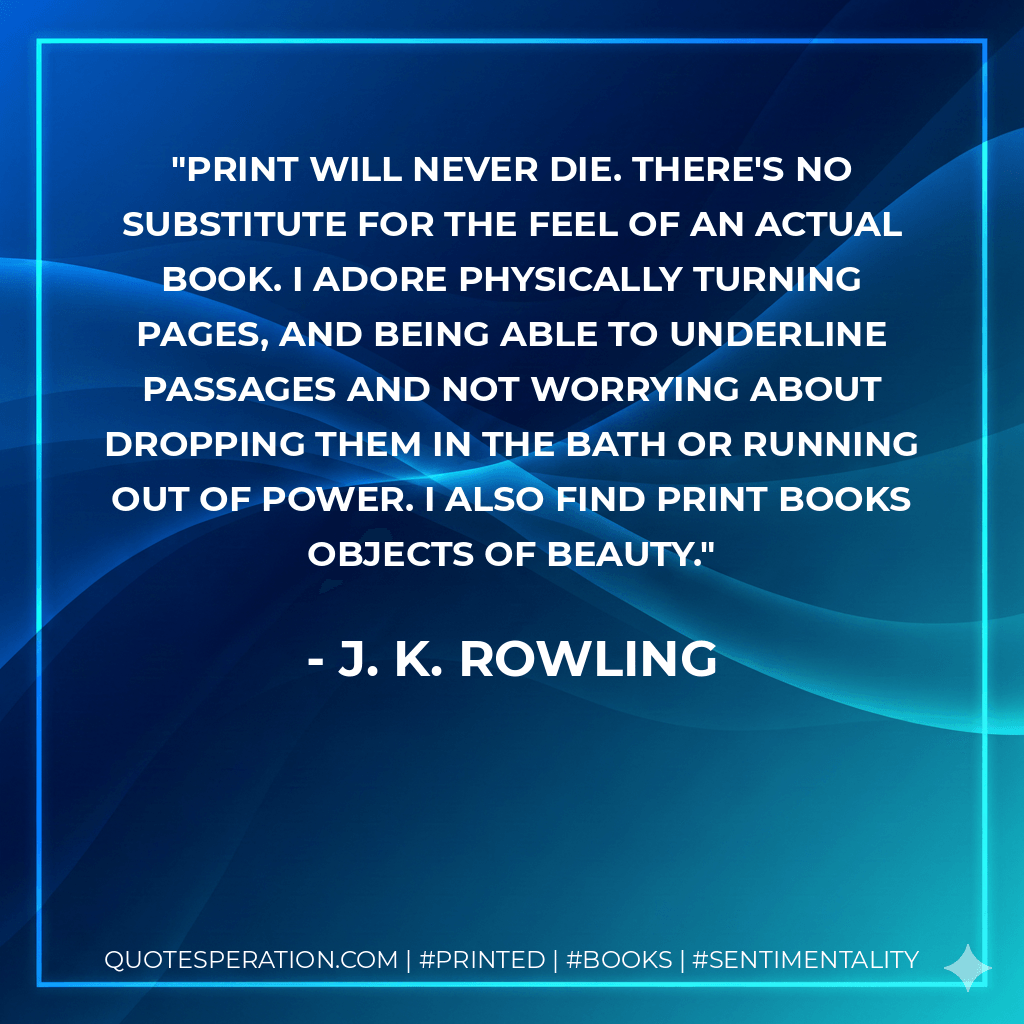
Print will never die. There's no substitute for the feel of an actual book. I adore physically turning pages, and being able to underline passages and not worrying about dropping them in the bath or running out of power. I also find print books objects of beauty.
It seems to me the book has not just aesthetic values - the charming little clothy box of the thing, the smell of the glue, even the print, which has its own beauty. But there's something about the sensation of ink on paper that is in some sense a thing, a phenomenon rather than an epiphenomenon. I can't break the association of electric trash with the computer screen. Words on the screen give the sense of being just another passing electronic wriggle.
There’s nothing like a printed book; the weight, the woody scent, the feel, the look.
There will always be people like me, who believe that to ripple the pages of a printed book is a special experience, one that through the centuries has taken millions from the darkness into the light.
I'm entirely of the mindset that when it comes to books, they've got to be paper.
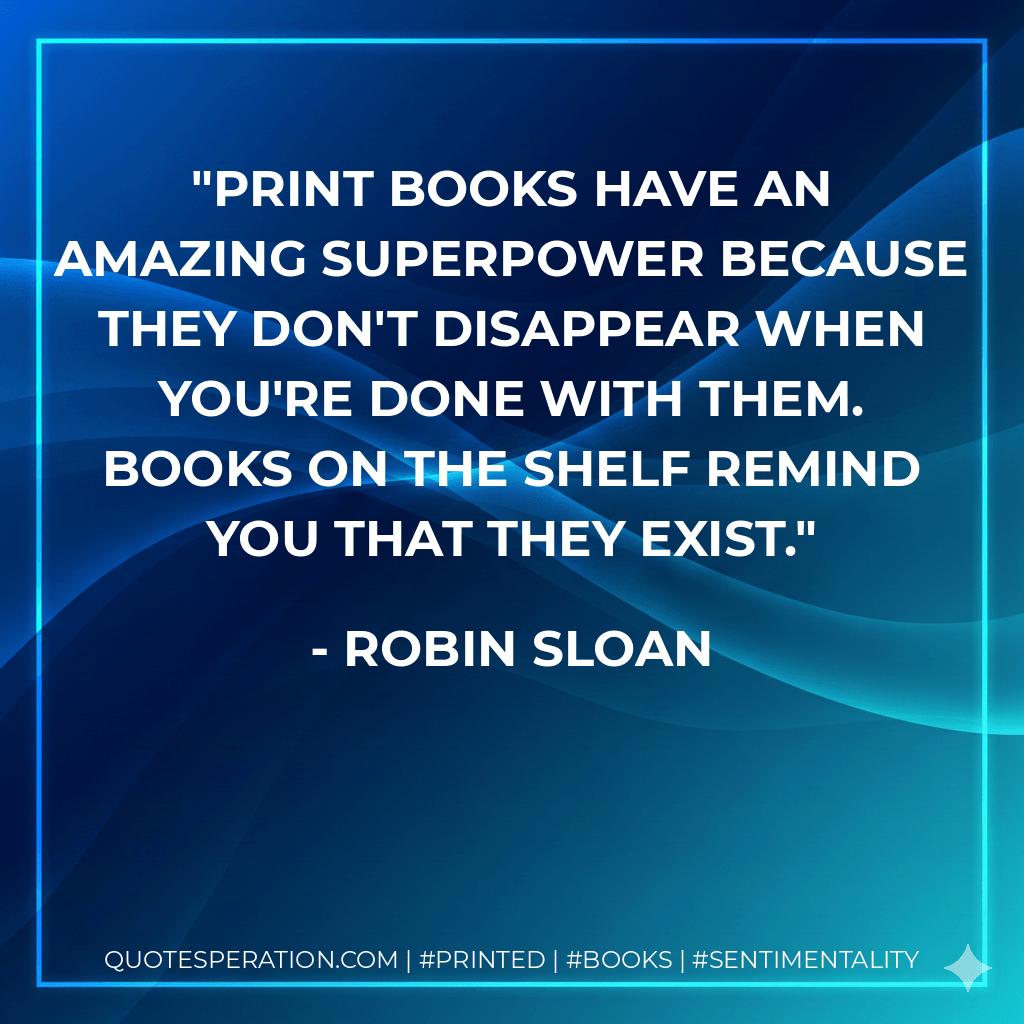
Print books have an amazing superpower because they don't disappear when you're done with them. Books on the shelf remind you that they exist.
Books as Timeless and Persistent
Once in a very long time you come across a book that is far, far more than the ink, the glue and the paper, a book that seeps into your blood.
The product of paper and printed ink, that we commonly call the book, is one of the great visible mediators between spirit and time, and, reflecting zeitgeist, lasts as long as ore and stone.
Printed books usually outlive bookstores and the publishers who brought them out. They sit around, demanding nothing, for decades. That's one of their nicest qualities - their brute persistence.
There is a Book worth all other books which were ever printed.
If I have not read a book before, it is, for all intents and purposes, new to me whether it was printed yesterday or three hundred years ago.
My gut feeling is that paper and ink are going to be with us for a long time yet, and in substantial quantities, though certainly books are now going to be available in other forms.
If the worst comes true, and the paper book joins the papyrus scroll and parchment codex in extinction, we will miss, I predict, a number of things about it.
Printed books usually outlive bookstores and the publishers who brought them out. They sit around, demanding nothing, for decades. That’s one of their nicest qualities – their brute persistence.
There is a value to books – unhackable, paper books – that measures far beyond mere ink and paper.
Print books have an amazing superpower because they don't disappear when you're done with them. Books on the shelf remind you that they exist.
The Value of Books Beyond Content
If e-book readers were invented before print books, (petty things such as) the smell of ink would have been some people’s only reason for not abandoning e-books.
There is a value to books—unhackable, paper books—that measures far beyond mere ink and paper.
It seems to me the book has not just aesthetic values - the charming little clothy box of the thing, the smell of the glue, even the print, which has its own beauty. But there's something about the sensation of ink on paper that is in some sense a thing, a phenomenon rather than an epiphenomenon. I can't break the association of electric trash with the computer screen. Words on the screen give the sense of being just another passing electronic wriggle.
The great dividing line between books that are made to be read and books that are made to be bought is not the purely modern thing it seems. We can trace it, if we try, back to the first printing-presses...
A book is tremendously important. Nobody ever paid for the price of a book, they only paid for the printing.
Gutenberg made printed books affordable, which kicked off an increase in literacy, which created a market for spectacles, which led to work on lenses that in turn resulted in the invention of microscopes and telescopes, which unleashed the discovery that the earth went round the sun.
There is a value to books – unhackable, paper books – that measures far beyond mere ink and paper.
I hope my children will grow up to love literature, but I expect they will absorb it as readily via a screen or pod as from glued quires of printed pages.
The Reading Experience
A book was mere paper splattered with ink until a reader’s mind gave it life.
Books are like flypaper, memories cling to the printed pages better than anything else.
What a feat of transmission: the emotive powers of the book, with no local habitation, pass safely from writer to reader, unmangled by printing and binding and shipping, renewed and available whenever we open it.
I had read all the books so hard that when I gave them back the print was faint and gray with exhaustion
I keep drinking the ink from my pen, and I'm balancing history books up on my head, but it all boils down to one quotable frase; if you love something, give it away!
I would always want printed books.
It seems to me the book has not just aesthetic values - the charming little clothy box of the thing, the smell of the glue, even the print, which has its own beauty. But there's something about the sensation of ink on paper that is in some sense a thing, a phenomenon rather than an epiphenomenon. I can't break the association of electric trash with the computer screen. Words on the screen give the sense of being just another passing electronic wriggle.
There will always be people like me, who believe that to ripple the pages of a printed book is a special experience, one that through the centuries has taken millions from the darkness into the light.
Print books have an amazing superpower because they don't disappear when you're done with them. Books on the shelf remind you that they exist.
The Physicality of Books
There's nothing like a printed book; the weight, the woody scent, the feel, the look.
I can begin to love the dried ink marks on the page more than I love the encounters that gave rise to them. If I am not careful, I can decide that I am really much happier reading my Bible than I am entering into what God is doing in my own time and place, since shutting the book to go outside will involve the very great risk of taking part in stories that are still taking shape.
I am a bookwith the pages all worn.the cover is tearing,the ink is fading,but I swear I'm worth the read.
And long gone are the days when a paperback meant a Penguin, pure and simple, let alone when a paperback publisher could confidently market a product with no image at all on the cover - just the title and the author's name, emphatically lettered. Beautiful.
A book on cheap paper does not convince. It is not prized, it is like a wheezy doctor with pigtail tobacco breath, who needs a manicure.
Print will never die. There's no substitute for the feel of an actual book. I adore physically turning pages, and being able to underline passages and not worrying about dropping them in the bath or running out of power. I also find print books objects of beauty.
It seems to me the book has not just aesthetic values - the charming little clothy box of the thing, the smell of the glue, even the print, which has its own beauty. But there's something about the sensation of ink on paper that is in some sense a thing, a phenomenon rather than an epiphenomenon. I can't break the association of electric trash with the computer screen. Words on the screen give the sense of being just another passing electronic wriggle.
There’s nothing like a printed book; the weight, the woody scent, the feel, the look.
A print book is really a kind of tree zombie.
Print books have an amazing superpower because they don't disappear when you're done with them. Books on the shelf remind you that they exist.
Books and Technology
If e-book readers were invented before print books, (petty things such as) the smell of ink would have been some people’s only reason for not abandoning e-books.
Printing is no longer the only way of reproducing books. Reading them, however, has not changed; it is the same as it has always been, since Callimachus administered the great library in Alexandrea.
Print will never die. There's no substitute for the feel of an actual book. I adore physically turning pages, and being able to underline passages and not worrying about dropping them in the bath or running out of power. I also find print books objects of beauty.
If the worst comes true, and the paper book joins the papyrus scroll and parchment codex in extinction, we will miss, I predict, a number of things about it.
Some day, as soon as a book is printed it will be simultaneously put into digital form. That will be a wonderful research tool, but it will never substitute for holding the book. I feel certain that at least within my lifetime, everyone will still be going to the bookstore and buying printed books. Thank God I’ll die before I have to worry about whether the printed book itself will disappear. That’s something I don’t want to live to see.
I hope my children will grow up to love literature, but I expect they will absorb it as readily via a screen or pod as from glued quires of printed pages.
If you think about it, the printing press allowed everyone to print books - it democratised the printing of information. For the first time, we could all print.
When you're making a print book in 2012, I actually think the onus is on you - and on your publisher - to make something that's worth buying in its physical edition.
Books' Impact on Society
The world has been printing books for 450 years, and yet gunpowder still has a wider circulation. Never mind! Printer's ink is the greater explosive: it will win.
I think it may not be a coincidence that the rise of printing and book publication and literacy and the phenomenon of best sellers all preceded the humanitarian reforms of the Enlightenment.
I want to print books by people in the film industry.
Basically, books were a luxury item before the printing press.
Gutenberg made printed books affordable, which kicked off an increase in literacy, which created a market for spectacles, which led to work on lenses that in turn resulted in the invention of microscopes and telescopes, which unleashed the discovery that the earth went round the sun.
The printing press did something really big for the world when everyone could get books in their hands and read.
If you think about it, the printing press allowed everyone to print books - it democratised the printing of information. For the first time, we could all print.
Books as Collectibles and Artifacts
Of all books printed, probably not more than half are ever read. Many are embalmed in public libraries; many go into private quarters to fill spaces; many are glanced at and put away...scarcely opened until the fire needs kindling. The most ardent book-lovers are not always the greatest readers; indeed, the rabid bibliomaniac seldom reads at all. To him books are as ducats to the miser, something to be hoarded and not employed... So pleasant it is to buy book; so tiresome to utilize them.
…secondhand bookstores have pilgrims. The words out of print are a call to arms for those who seek a Holy Grail made of paper and ink.
My book is being made into a film. The pages are being recycled into cellulose acetate fiber for use in the manufacture of transparent coating material.
The majority of the books of our time give one the impression of having been manufactured in a day out of books read the day before.
Paperbacks blink in and out of print like fireflies. They also, as older collectors have ruefully discovered, fade and fall apart even more rapidly than their owners.
With paper printed books, you have certain freedoms. You can acquire the book anonymously by paying cash, which is the way I always buy books. I never use a credit card. I don't identify to any database when I buy books. Amazon takes away that freedom.
Century also had shelves of obsolete printed books.
There are only two reasons for buying a book, after all. Either we intend to read it, in which case most of us find a printed version preferable, or we don’t intend to read it, in which case a printed version is absolutely essential.
You have ink in your blood, boy, and no help for it. Books will never be just a business to you.
Other
Telephone books are, like dictionaries, already out of date the moment they are printed....
A book unopened alters not the ink on its pages. What is there is there.
The books I would like to print are the books I love to read and keep.
I think there are many ways to matter." He plucks the book from his pocket. "These are the words of a man - Voltaire. But they are also the hands that set the type. The ink that made it readable, the tree that made the paper. All of them matter, though credit goes only to the name on the cover.
Of the two thousand original copies printed of The History of Love, some were bought and read, many were bought and not read, some were given as gifts, some sat fading in bookstore windows serving as landing docks for flies, some were marked up with pencil, and a good many were shredded to pulp along with other unread or unwanted books, their sentences parsed and minced in the machine's spinning blades.
Books age, they yellow, the pages dry and crackle and tear. Who can tell what tiny defect will change simple paper and ink into true meaning?
If I send all the books that I faithfully wrote overseas, would that, for any chance, be considered work-shipping??
I only read books if Voltaire's cock has been dipped in red ink and rolled over the cover.
Anything added can be subtracted; anything verbose can be simplified; anything missing can be found. Manuscripts are not books but negatives waiting for the fixer that turns them into prints.
Let us take down one of those old notebooks which we have all, at one time or another, had a passion for beginning. Most of the pages are blank, it is true; but at the beginning we shall find a certain number very beautifully covered with a strikingly legible handwriting….here we have copied out fine passages from the classics;…here, most interesting of all, lists of books that have actually been read, as the reader testifies with some youthful vanity by a dash of red ink.
Books that are out of print frequently come back in print. A university press or a smaller house may bring it back, or it may come back when the author publishes a new book with a major publisher.
The connection between authors, printers, and booksellers must be kept up.
You need to recognize that the copyright date on a book reflects when it came out, not when it was written - assume that the information in the book is at least a year older than the copyright date, and possibly two.
I'm very lucky. I'm very fortunate that my books have never gone out of print - none of them
Pulp magazines were pretty much the principal form of inexpensive literature in the first part of the 20th century. If you wanted to read something and didn't want to spend the money on a hardcover book, you would go to the news stand and buy a pulp fiction magazine.
I don't know where I got the idea for 'The Great Thumbprint Drawing Book'; I just told my brain to think of a book, and it did.
Learning hath gained most by those books by which the printers have lost.
One way an author dies a little each day is when his books go out of print.
Most of the untranscribed and unpublished manuscripts in the book popped out of boxes at me when I wasn't looking for them; I picked them up out of the corner of my eye.
When I found the book was condemned as soon as the book was printed, or rather as soon as it was set up ready to print, I held it in plates for a year nearly, waiting to see what would come out of all this discussion.
I'm kind of surprised that so many of those other books were almost exactly like mine. They even follow the form. There were some books that even copied the stamp. It shows so little imagination.
There are only two reasons for buying a book, after all. Either we intend to read it, in which case most of us find a printed version preferable, or we don't intend to read it, in which case a printed version is absolutely essential.
We're trying to find someone who can print up the books for free, because we do not have the cash flow to do that ourselves, ... Our sales rep is running around to all the printing plants, trying to find someone.
We're trying to find someone who can print up the books for free.
The only information forthcoming so far is that it will cost me around $1500 to obtain access to the 710 pages of material,
"Out of Print" is bookseller speak for "We can't be hedgehogged".
The world's a book, writ by the eternal art - Of the great author printed in man's heart, 'Tis falsely printed, though divinely penned, And all the errata will appear at the end
The great dividing line between books that are made to be read and books that are made to be bought is not the purely modern thing it seems. We can trace it, if we try, back to the first printing-presses ...
Those books are still in print, all the books I've written are still in print, but I heard that other people had been victimized also.
Most of my books have caused distribution and printing problems in the past.
A book they intended to use (may be) out of print. That might cause a little bit of a problem.
The great dividing line between books that are made to be read and books that are made to be bought is not the purely modern thing it seems. We can trace it, if we try, back to the first printing-presses.
But since printing came in no one wants illustrated works, they are happy with these cheap books with their ugly, square letters all squashed together.
To me, all the juice of a book is in an unpublished manuscript, and the published book is like a dead tree – just good for cutting up and building your house with.
The world has been printing books for 450 years, and yet gunpowder still has a wider circulation. Never mind! Printer’s ink is the greater explosive: it will win.
Books weren’t worth the paper they were printed on.
I’m kind of surprised that so many of those other books were almost exactly like mine. They even follow the form. There were some books that even copied the stamp. It shows so little imagination.
Gutenberg, your printing press has been violated by this evil book, Mein Kampf!
I only read books if Voltaire’s cock has been dipped in red ink and rolled over the cover.
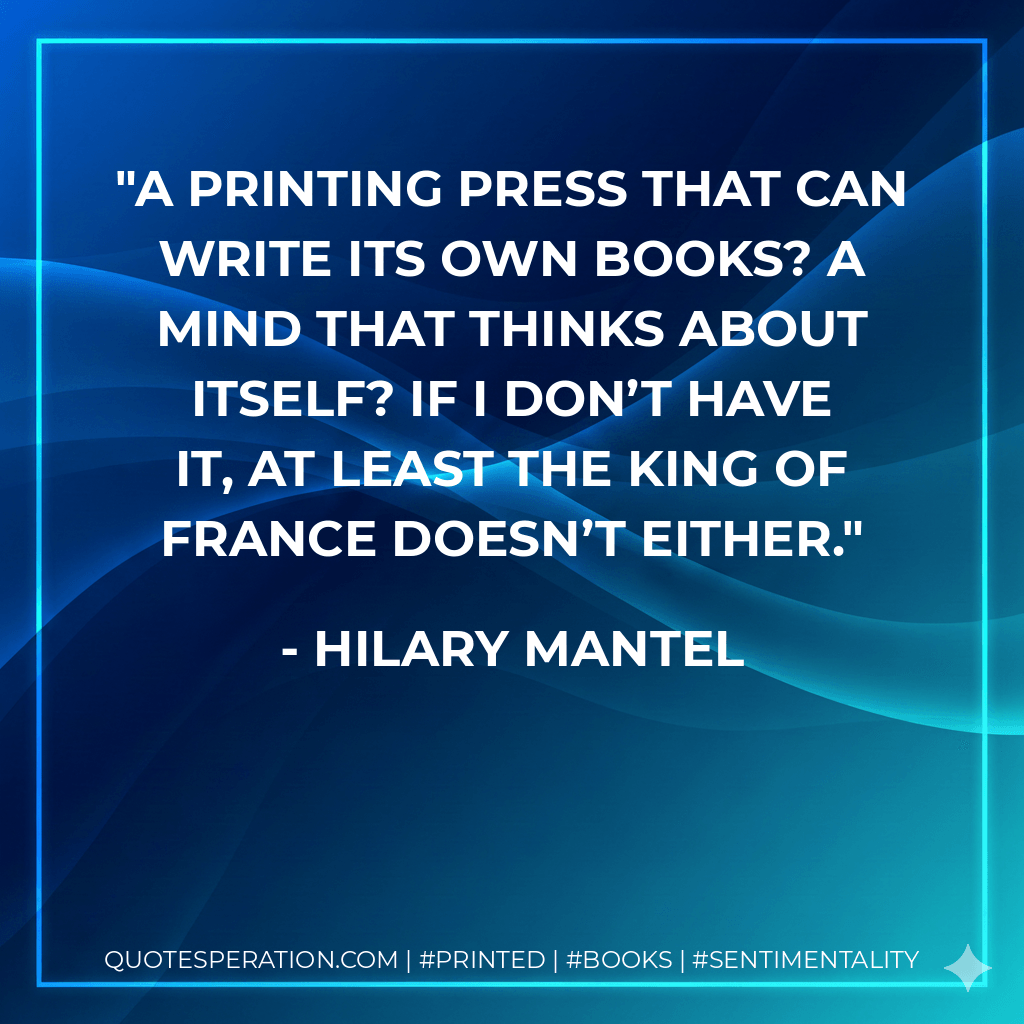
A printing press that can write its own books? A mind that thinks about itself? If I don’t have it, at least the King of France doesn’t either.
I had read all the books so hard that when I gave them back the print was faint and gray with exhaustion.
A book unopened alters not the ink on it’s pages.
I want to gather up all the ink cartridges in the universe, because somewhere, mixed in with all that ink, is the next great American novel. And I’d love nothing more than to drink it.
From an early age they knew what little value the world placed in books, and so didn’t waste their time with them. Whereas I, even now, persist in believing that these black marks on white paper bear the greatest significance, that if I keep writing I might be able to catch the rainbow of consciousness in a jar. The only trust fund I have is this story, and unlike a prudent Wasp, I’m dipping into principal, spending it all.
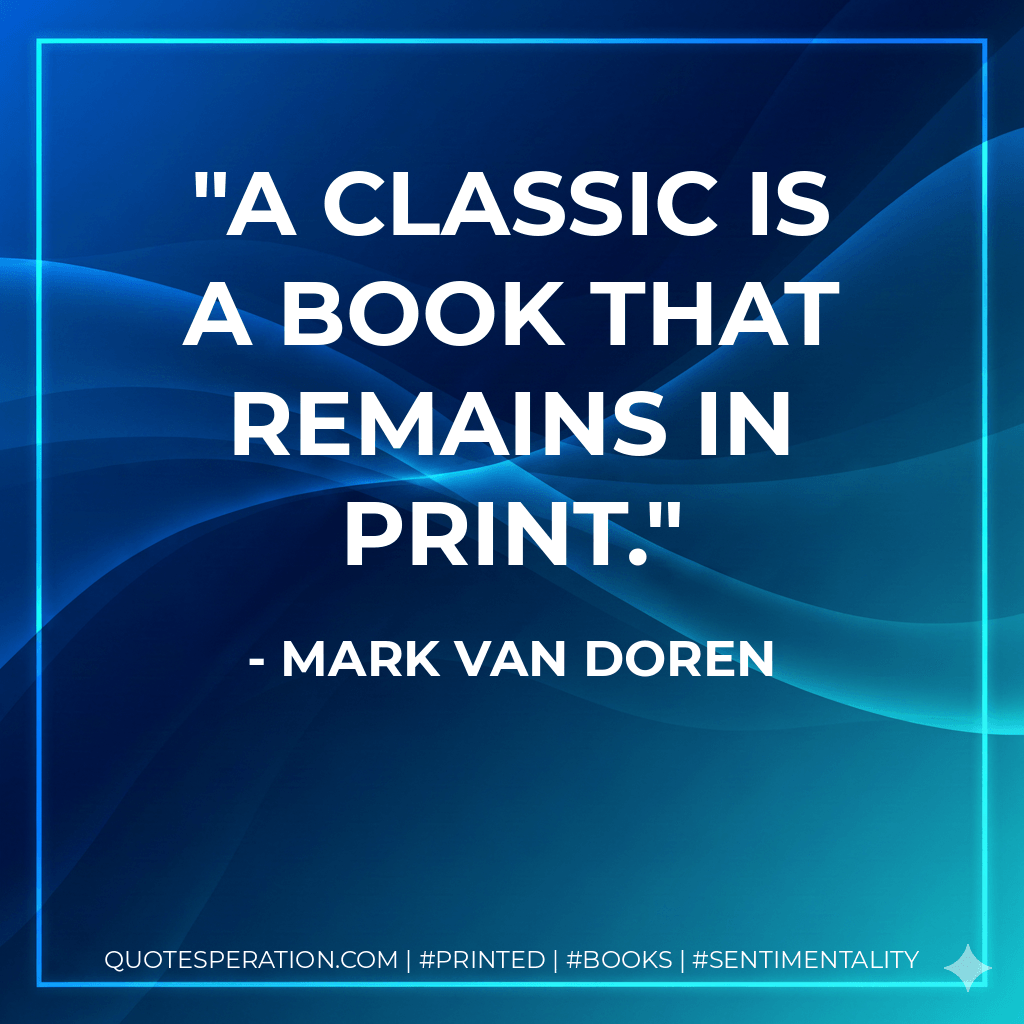
A classic is a book that remains in print.
I’m very lucky. I’m very fortunate that my books have never gone out of print – none of them.
And long gone are the days when a paperback meant a Penguin, pure and simple, let alone when a paperback publisher could confidently market a product with no image at all on the cover – just the title and the author’s name, emphatically lettered. Beautiful.
The fact that there are still mainstream print media outlets willing to devote precious pages to book coverage at all is a triumph we should all be celebrating.
Thanks to the Jolabokaflod, books still matter in Iceland; they get read and talked about. Excitement fills the air. Every reading is crowded; every print run is sold.
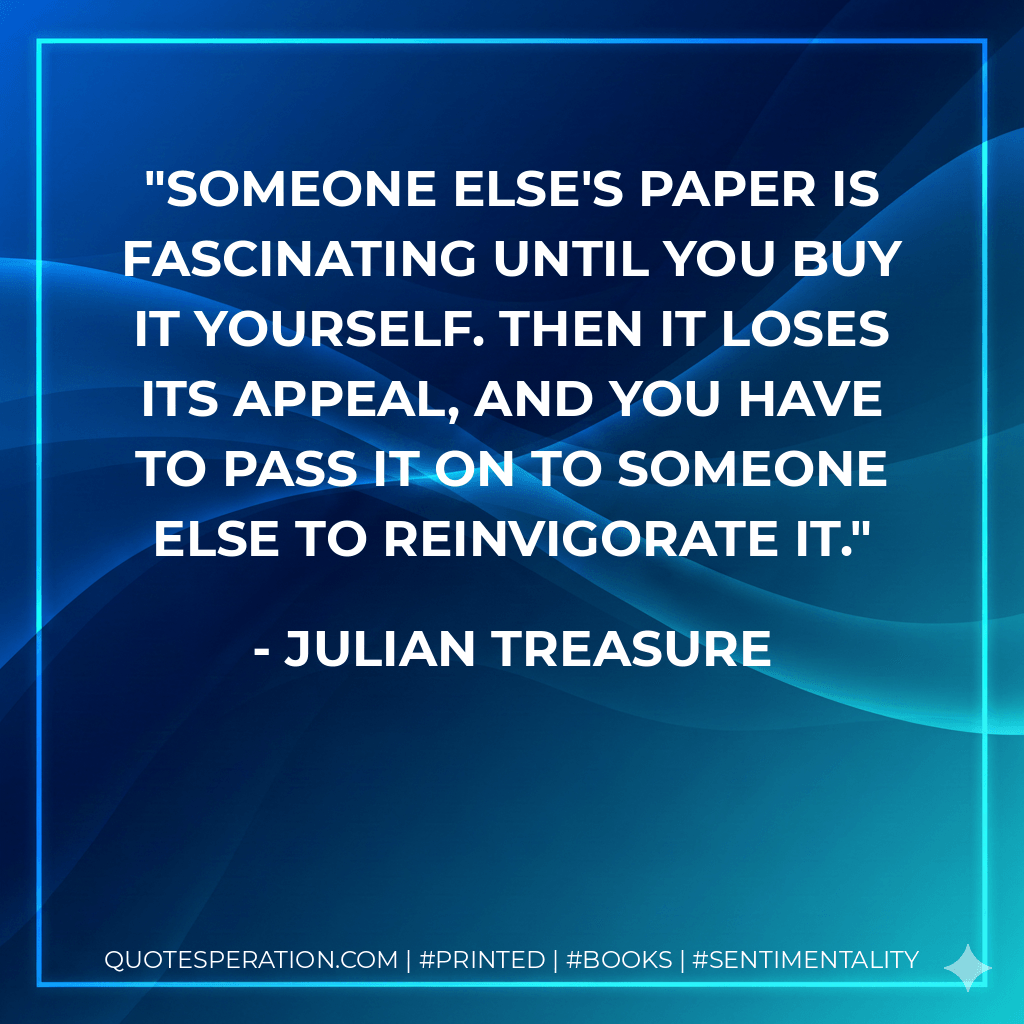
Someone else's paper is fascinating until you buy it yourself. Then it loses its appeal, and you have to pass it on to someone else to reinvigorate it.
Oh, my parents never cracked a book, just newspapers.
I'm very lucky. I'm very fortunate that my books have never gone out of print - none of them.
More Collections
Friendship Quotes Hub
Sports Team Confidence & Success Quotes
Persistence and Progress

Best Limited Social Circles Quotes
Best Life Quotes
Best Intense Rivalry Games Quotes
Related Articles

Patrick Wright
Software engineer and creator of Quotesperation. I curate wisdom from history's greatest minds to inspire and guide modern life. When I'm not collecting quotes, I'm writing about technology and finding connections between timeless wisdom and today's challenges.